
Main Courses
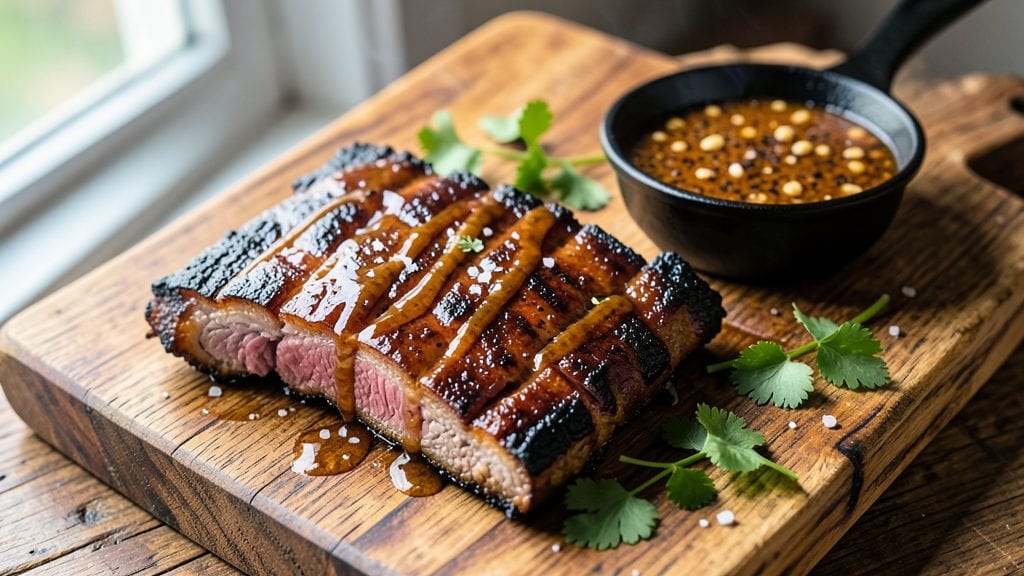
Mastering BBQ pork spare ribs with apple cider vinegar bark and sticky glaze transforms tough cuts into fall-off-the-bone tenderness. The secret lies in balancing smoke, acidity, and patience—just like my first backyard cookout where hickory smoke first hooked me.
This recipe delivers that perfect bark and glaze without shortcuts, using time-tested techniques that elevate simple ingredients into something extraordinary.
The 3-2-1 method—3 hours smoking, 2 hours wrapped, and 1 hour unwrapped—ensures deep flavor penetration while maintaining moisture.
A dry rub of brown sugar, smoked paprika, and garlic powder creates that coveted dark bark, while apple cider vinegar in the glaze tenderizes the meat and adds a bright tang. The result?
Ribs so tender they practically dissolve at the touch, with a sticky-sweet glaze that clings to every bite.
By the time you pull these ribs from the smoker, you’ll have a restaurant-quality dish that rivals any competition entry. The bark should be dark and crisp, the meat tender enough to shred with a fork, and the glaze glossy with just the right balance of sweet and tangy.
Serve with classic sides like tangy coleslaw or buttery cornbread to complete the meal—every bite is a testament to slow-cooked perfection.
This isn’t just a recipe; it’s a process that rewards patience with unmatched flavor. Whether you’re grilling for a crowd or treating yourself to a solo feast, these ribs deliver the kind of satisfaction that keeps you coming back to the smoker. Let’s get cooking—your taste buds will thank you.
Ingredients for bbq pork spare ribs
Six pounds of ribs, a handful of pantry staples, and the magic of slow smoke.
| Ingredient | Amount | Notes |
|---|---|---|
| Pork Spare Ribs 🍖 | 6 lb | Bone-in, meaty ends preferred |
| Brown Sugar 🍚 | ½ cup | Packed, light or dark |
| Smoked Paprika 🌶️ | 2 tbsp | For deep bark flavor |
| Garlic Powder 🧄 | 1 tbsp | Freshly ground preferred |
| Kosher Salt 🧂 | 1 tbsp | Coarse grain preferred |
| Black Pepper 🌶️ | 1 tsp | Freshly cracked |
| Apple Cider Vinegar 🍏 | ½ cup | Unfiltered, organic preferred |
| Honey 🍯 | ½ cup | Raw or clover honey |
| Tomato Paste 🍅 | ¼ cup | Squeeze tube or canned |
| Yellow Onion 🧅 | 1 whole | Medium size, diced |
| Garlic Cloves 🧄 | 6 cloves | Fresh, minced |
| Hickory Wood Chips 🌳 | 1 package | Unsoaked, for smoker |
| Aluminum Foil 📄 | 2 sheets | Heavy-duty, for wrapping |
| Butter 🧈 | ¼ cup | Unsalted, softened |
| Fresh Rosemary 🌿 | ¼ cup | Chopped, for finishing |
The ribs are the star, so grab bone-in spare ribs with meaty ends—they add flavor and texture. Costco or local butchers often have the best cuts, but the grocery store works too. Look for vibrant color and good marbling—no gray or slimy spots. If buying frozen, thaw overnight in the fridge. The hickory wood chips? Traeger or Traeger Grills sell them pre-packaged, but any quality brand works. Fresh rosemary makes the finishing touch special, but dried works in a pinch—just double the amount.
No smoked paprika? Regular paprika plus a pinch of liquid smoke gets you close. Short on apple cider vinegar? White vinegar or lemon juice works, but the flavor won’t be as complex. The tomato paste can be the squeeze tube kind—Trader Joe’s sells them for convenience. Want extra bark? Add 1 tbsp of coffee grounds to the rub. For the glaze, if you’re out of honey, maple syrup or agave works, but honey’s floral notes are ideal. The butter in the glaze is non-negotiable—it adds richness that nothing else can match.
Store the dry rub in an airtight container for up to 2 months. The ribs themselves? 3 days max in the fridge once cooked—they’re best fresh. The glaze keeps for 1 week in the fridge, but reheats beautifully. Freeze cooked ribs for 3 months—just thaw in the fridge overnight. Pro tip: Wrap ribs tightly in foil before freezing to prevent freezer burn. The leftovers? Shred and toss in tacos or sandwiches for a flavor-packed meal.
Why You'll Love This Recipe
- Five-Ingredient Magic: I swear by this combo—just ribs, brown sugar, smoked paprika, garlic powder, and salt. No fancy marinades or hours of prep. Honestly, the paprika alone gives that smoky depth without needing a smoker.
- Crispy-Soft Perfection: That caramelized crust from the brown sugar? Chef’s kiss. But it doesn’t stay dry—inside, the meat stays tender enough to melt. My daughter picks out the best pieces first, and I don’t even mind.
- Tailgate or Tuesday: Serve it on a paper plate at a game or toss leftovers in a sandwich for lunch. Between us, these ribs work just as hard for a crowd as they do for a lazy dinner. (Yes, even on a Tuesday night.)
- Leftovers That Don’t Suck: Most ribs turn sad after day two, but these? They’re still amazing. I’ll reheat a rack in the oven with a splash of apple cider vinegar—suddenly, they taste like they’re fresh off the grill again.
Step-by-step instructions for BBQ pork spare ribs with apple cider vinegar glaze
Here's how to transform tough pork ribs into fall-off-the-bone tender morsels with a perfect bark and sticky glaze.
Prepare and Season the Ribs
Remove the pork spare ribs from the packaging and pat them dry completely with paper towels. I can't stress this enough—moisture is the enemy of crispy bark. You're looking for ribs that feel completely dry to the touch, especially in the meaty ends where the bark will form.
In a small bowl, combine the 0.5 cup brown sugar, 2 tablespoons smoked paprika, 1 tablespoon garlic powder, 1 tablespoon kosher salt, and 1 teaspoon black pepper. Mix well until the spices are evenly distributed and the sugar is coated. This dry rub is what will create that beautiful bark and deep flavor profile.
Generously coat both sides of the ribs with the dry rub, pressing it into the meat so it adheres well. Pay special attention to the meaty ends and the bone side—these areas need extra attention for maximum flavor penetration. Once coated, let the ribs sit at room temperature for 30 minutes before cooking. This allows the rub to penetrate the meat and creates a better bark.
Smoke the Ribs Low and Slow
Set up your smoker using the hickory wood chips and preheat to 225°F. I've found this temperature gives you that perfect balance of smoke flavor without cooking the ribs too quickly. Place the ribs meat-side up on the smoker grates, leaving space between each rack for proper air circulation.
Close the lid and smoke the ribs for 2.5 to 3 hours until they reach an internal temperature of 165°F at the thickest part of the meat. You'll notice the ribs will go through "the stall" around 160°F—this is when the temperature stops rising as moisture evaporates. Don't be tempted to open the smoker during this time; every time you peek, you add 15-20 minutes to your cook time.
Here's the thing—you want to see a dark mahogany bark forming on the meat. If the bark isn't developing properly, you can lightly spray the ribs with apple cider vinegar every 30 minutes starting after the first hour. This helps create that beautiful crust and adds tangy depth to the flavor.
Wrap and Finish the Ribs
Once the ribs reach 165°F, it's time to wrap them. Line a large sheet of aluminum foil with another sheet to create a double layer. Place the ribs on the foil and spoon 0.25 cup tomato paste over the meaty ends and any exposed areas. The tomato paste helps create a glossy finish and adds sweetness that complements the vinegar.
Fold the foil tightly around the ribs, creating a sealed packet. Return the wrapped ribs to the smoker and continue cooking at 225°F for another 1.5 to 2 hours until they reach an internal temperature of 203°F. This wrapping technique, often called the "Texas crutch," helps break down collagen and tenderize the meat while maintaining that beautiful bark.
Prepare the Sticky Glaze
While the ribs are finishing, prepare the glaze by combining 0.5 cup apple cider vinegar, 0.5 cup honey, 0.25 cup softened butter, 1 diced yellow onion, and 6 minced garlic cloves in a saucepan. Bring the mixture to a simmer over medium heat and cook for 10 minutes until the onion is softened and the liquid reduces slightly.
Strain the mixture through a fine-mesh sieve to remove the onion and garlic, then return the liquid to the saucepan. Add the 0.25 cup chopped fresh rosemary and simmer for another 5 minutes to infuse the flavors. This glaze should be thick enough to coat the back of a spoon but still pourable—if it's too thick, add a splash of water to reach your desired consistency.
Apply Glaze and Serve
Remove the ribs from the smoker and carefully unwrap them. Place them on a clean cutting board and let them rest for 10 minutes. This resting period allows the juices to redistribute, ensuring each bite is moist and flavorful.
Using a pastry brush, generously coat both sides of the ribs with the warm glaze. The glaze should stick to the ribs and create that signature sticky finish. Serve the ribs immediately, cutting them into individual ribs or leaving them whole for easy handling. The combination of the smoky bark, tender meat, and sweet-tangy glaze makes these ribs unforgettable.
Pro Tips For Making Bbq Pork Spare Ribs
- Trim the Fat First: Spare ribs have a thick fat cap that never renders out—it just gets rubbery. Grab kitchen shears and snip it off before seasoning; you’ll taste the difference, and the sauce sticks better to lean meat.
- Salt the Ribs Twice: Don’t just salt them once. After the initial dry rub, let them sit uncovered in the fridge for 2 hours, then hit them with another layer of kosher salt right before cooking. The second coat caramelizes faster and cuts through the sweetness of the brown sugar.
- Skip the Boil, Use Vinegar: I used to parboil ribs to tenderize them, but that makes them soggy. Instead, toss them in a mix of 1 cup apple cider vinegar and 1 cup water for 10 minutes—it breaks down collagen without steaming the meat.
- Wrap in Foil at 200°F: Once the ribs hit 160°F internally, wrap them in foil and lower the heat to 200°F for 30 minutes. This isn’t just resting—it’s letting the meat finish cooking gently, so you don’t dry them out when you hit them with the smoky paprika and brown sugar glaze.
Dietary considerations for this dish
Gluten-Free Adaptations
For gluten-free diners, the dry rub stays the same—just ensure your smoked paprika and other spices are certified gluten-free. The real adjustments come with the glaze: swap regular tomato paste for a gluten-free version like Muir Glen Organic Tomato Paste (check labels).
I also recommend using certified gluten-free honey and gluten-free apple cider vinegar to avoid cross-contamination. The foil wrap and smoking process remain identical, so you still get that perfect bark and tender meat. 🌱
Low-Sodium Options
If you're watching sodium, reduce the kosher salt in the dry rub to ½ tablespoon and replace it with 1 teaspoon garlic powder and ½ teaspoon onion powder for depth. For the glaze, skip the tomato paste entirely and use low-sodium chicken broth instead of vinegar to thin it out.
I’ve found that 1 teaspoon of lemon juice adds tang without adding sodium. The ribs will still be flavorful, just with a lighter touch. 💡
Dairy-Free Glaze
The glaze in this recipe relies on butter for richness, but you can easily make it dairy-free. Replace the ¼ cup butter with ¼ cup coconut oil or vegan butter like Miyoko’s.
The texture will be slightly different—coconut oil adds a subtle sweetness, while vegan butter mimics the original more closely. For extra richness, stir in 1 tablespoon of tahini at the end. The ribs will still be sticky and delicious, just without dairy. 🥥
Sugar-Free Bark
Want that dark, crispy bark without sugar? Swap the ½ cup brown sugar in the rub for ¼ cup erythritol or monk fruit sweetener (like Lakanto). Add 1 teaspoon of coffee grounds to deepen the color and flavor.
The bark will be less glossy but still develop a beautiful crust. For the glaze, use sugar-free honey substitute (like ChocZero) or monk fruit syrup. The ribs will have a smoky, savory profile with no sweetness. 🌶️
Allergen-Friendly Tips
If you're dealing with nut allergies, double-check all ingredients—some smoked paprika brands process in facilities with nuts. For soy allergies, avoid soy-based marinades or sauces, but this recipe is naturally soy-free.
When foraging for fresh rosemary, ensure it’s grown in a clean environment to avoid cross-contamination. I always buy my herbs from trusted farmers markets to stay safe. 🌿
Keto-Friendly Adjustments
To make these ribs keto-friendly, skip the brown sugar in the rub and use 1 tablespoon of erythritol instead. For the glaze, replace the honey with sugar-free maple syrup (like Lakanto) and reduce the tomato paste to 1 tablespoon to cut carbs.
The ribs will still be tender and flavorful, with a smoky, slightly tangy profile. Serve with a side of cauliflower mash or zucchini noodles to keep it low-carb. 🥬
Nutrition facts
Frequently asked questions
How do I know when pork spare ribs are fully cooked?
Use a meat thermometer to check the internal temperature at the thickest part of the meat. Ribs are done when they reach 203°F—this ensures maximum tenderness by breaking down collagen. The bark should be dark mahogany, and the meat should pull away from the bone easily when probed with a fork. Never rely on time alone; temperature is your best guide.
Can I use a grill instead of a smoker for this recipe?
Convert your grill to a smoker by adding hickory wood chips to a smoker box or wrapping them in foil with holes. Maintain a steady 225°F temperature using indirect heat. The 3-2-1 method works perfectly on a grill—just monitor heat zones closely to avoid flare-ups. For extra smoke flavor, spritz ribs with apple cider vinegar every 30 minutes during the unwrapped phase.
Why did my ribs turn out dry despite following the recipe?
Overcooking is the #1 cause of dry ribs. Always wrap them at 165°F and aim for 203°F final temp. If your smoker runs hot, lower the temp to 200°F during the wrapped phase. Another common mistake? Skipping the rest time—let ribs rest 10 minutes before cutting to redistribute juices. For extra moisture, brush with a thin layer of melted butter during the final unwrapped hour.
What's the best way to store and reheat leftover ribs?
Store ribs in an airtight container for up to 3 days in the fridge. To reheat, wrap tightly in foil and bake at 300°F for 15 minutes until warmed through. For best results, reheat only what you plan to eat immediately—leftovers lose some bark crispness. Freeze ribs for up to 3 months by wrapping them individually in foil and plastic wrap. Thaw overnight in the fridge before reheating.
How can I make these ribs spicier without adding heat?
Boost flavor without capsaicin by adding 1 teaspoon of cayenne pepper to the dry rub or 1 tablespoon of chipotle powder to the glaze. For depth, infuse the apple cider vinegar with 2-3 dried arbol chiles for 15 minutes before using. Fresh herbs like thyme or oregano in the glaze add aromatic complexity. Remember, smoke itself carries heat—higher temps create more char, which can intensify perceived spice.