
Main Courses
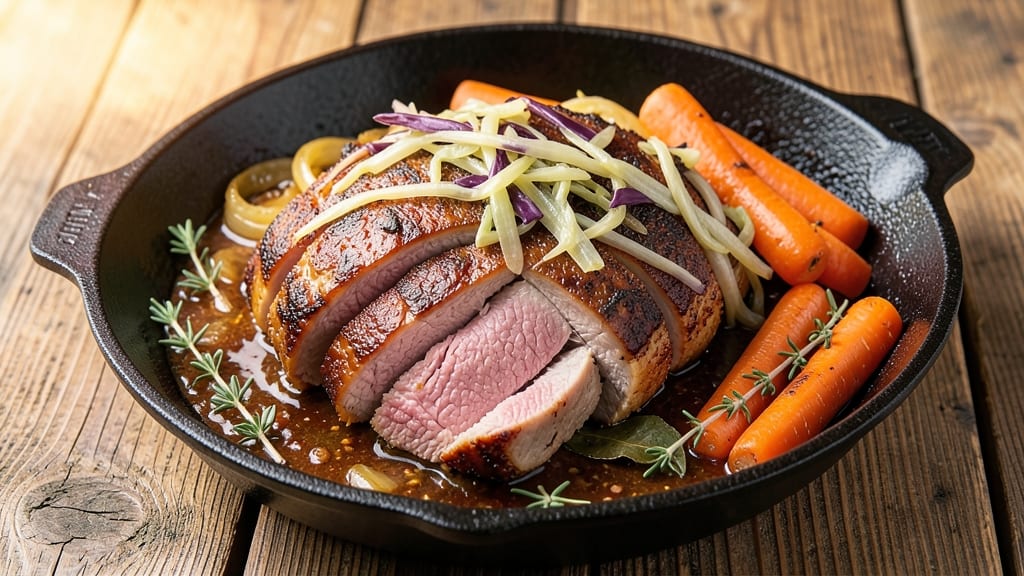
Mastering braised pork and sauerkraut means balancing rich, savory depths with crispy edges that make every bite irresistible. This German-inspired dish transforms tough pork cuts into tender perfection while preserving the tangy crunch of sauerkraut—exactly how my grandmother used to prepare it during long winter evenings.
The slow simmer builds layers of flavor that turn simple ingredients into something extraordinary.
What sets this recipe apart is the technique: searing the pork first creates a flavorful crust, while the long braise in beer and broth tenderizes the meat without drying it out. The sauerkraut gets caramelized at the edges, adding a sweet contrast to its natural tang.
With just a few staples—pork shoulder, sauerkraut, onions, and spices—you’ll achieve restaurant-quality results that taste even better the next day.
The result is a dish where crispy pork edges give way to melt-in-your-mouth tenderness, all wrapped in a sauce that’s rich yet balanced by the sauerkraut’s acidity. Serve it with crusty bread to soak up every last drop of that deep, savory braising liquid.
This is comfort food at its finest—warm, hearty, and impossible to resist.
Perfect for family dinners or cozy gatherings, this recipe scales effortlessly and reheats beautifully. The key is patience—letting the flavors develop over time makes all the difference. Let’s get cooking!
Ingredients for braised pork and sauerkraut
Fourteen essential ingredients transform tough pork into melt-in-your-mouth perfection with crispy edges and tangy depth.
| Ingredient | Amount | Notes |
|---|---|---|
| Pork Shoulder 🥩 | 2 ½ lb | Bone-in for richer flavor |
| Sauerkraut 🥬 | 2 cups | Drained, rinsed if too acidic |
| Yellow Onions 🧅 | 1 whole | Thinly sliced, medium size |
| Carrots 🥕 | 3 whole | Peeled, cut into thick slices |
| Fresh Thyme 🌿 | 2 tbsp | Leaves only, chopped finely |
| Bay Leaves 🌿 | 2 whole | Dried, standard size |
| Black Peppercorns 🌶️ | 1 tsp | Freshly cracked |
| Dried Juniper Berries 🌿 | ½ tsp | Crushed lightly |
| Dark Beer 🍺 | 1 ½ cups | Stout or porter, chilled |
| Chicken Broth 💧 | 1 cup | Low-sodium, homemade preferred |
| Apple Cider Vinegar 🍎 | 1 tbsp | For acidity balance |
| Unsalted Butter 🧈 | 2 tbsp | Cold, for finishing |
| Diamond Crystal Kosher Salt 🧂 | 1 ½ tsp | For seasoning |
The pork shoulder is non-negotiable—look for well-marbled cuts from the butcher section, not pre-cut packages. Whole Foods or local meat counters often carry superior quality with better marbling. If you can't find bone-in, bone-in pork butt works too. The sauerkraut should be firm and slightly crunchy, not mushy or overly sour—Reinhart Foods brand is a reliable choice. Fresh thyme and juniper berries elevate this dish from ordinary to extraordinary; Penzeys Spices sells high-quality dried juniper berries if you can't find them fresh. The beer matters too—Guinness or Samuel Smith's Nut Brown Ale add depth, but any dark beer will work.
No fresh thyme? Dried thyme at one-third the amount suffices, though fresh is preferred. Substituting beer with extra chicken broth plus a splash of balsamic vinegar works in a pinch, though the flavor will be subtly different. The carrots can be swapped for celery root or parsnips for variation, though carrots provide the ideal sweetness. If your sauerkraut is too acidic, rinse it thoroughly before using—this balances the tang without losing texture. The butter at the end is crucial; European-style unsalted butter like Plugrá adds richness that regular butter can't match.
Store the cooked pork and sauerkraut in an airtight container for up to 5 days in the refrigerator, though it tastes even better the next day as flavors meld. Freeze portions for up to 3 months—the sauce thickens beautifully when reheated. For crispy edges, pat the pork dry before searing and don't overcrowd the pan. The leftovers reheat splendidly; simply add a splash of broth or water and simmer until warmed through. Serve with crusty sourdough or rye bread to soak up every last bit of that savory braising liquid.
Why You'll Love This Recipe
- One-Pan Magic: I swear by this for lazy nights—just brown the pork, toss in the chopped veggies and sauerkraut, then let the oven do the work. No flipping pans, no fuss.
- Leftover Goldmine: Between us, this dish begs to be made extra. The pork gets tenderer overnight, and the flavors meld into something even better. Pack it for lunches or reheat it for dinner—no one will guess it’s the same meal.
- Budget-Friendly Feast: Pork shoulder stretches far, and sauerkraut lasts forever. Honestly, I’ve fed six people for under $15 with this—plus, it’s one of those meals where the leftovers disappear faster than you can say "seconds, please."
Step-by-step instructions for braised pork and sauerkraut
This method delivers tender, fall-apart pork with crispy edges and a rich, tangy sauce.
Sear the Pork Shoulder for Depth of Flavor
Pat the 2.5 lb pork shoulder dry with paper towels—this ensures maximum browning. Heat a heavy Dutch oven over medium-high heat until hot, then add the pork shoulder, fat-side down. Let it sear undisturbed for 8-10 minutes until the fat renders and the meat develops deep golden-brown crusts. Flip and sear the other side for another 8-10 minutes, pressing gently with a spatula to prevent curling.
Here's the thing—this initial sear locks in juices and builds the foundation for crispy edges later. If you rush this step, the pork will steam instead of brown. Once both sides are well-crusted, remove the pork and set it aside on a plate. You'll notice the rendered fat in the pot—this is pure flavor gold, so don't wipe it out.
Build the Aromatic Base with Onions, Carrots, and Herbs
In the same Dutch oven, add the 1 whole yellow onion (thinly sliced) and 3 whole carrots (cut into thick slices). Cook over medium heat for 5-6 minutes, stirring occasionally, until the onions soften and the carrots begin to caramelize slightly. This step develops their natural sweetness, which balances the tangy sauerkraut later.
Add the 2 tbsp fresh thyme (leaves only), 2 whole bay leaves, 1 tsp cracked black peppercorns, and 0.5 tsp crushed dried juniper berries. Stir for 30 seconds until fragrant—this releases the essential oils that will infuse the braising liquid. The juniper berries add a piney depth that pairs beautifully with the pork, while the thyme and bay leaves round out the herbal profile. Don't skip this step; these aromatics are the soul of the dish.
Deglaze and Simmer with Beer and Broth
Pour in the 1.5 cups dark beer and scrape up all the browned bits from the bottom of the pot with a wooden spoon. This deglazing step captures all the flavor you worked so hard to create. Add the 1 cup chicken broth and 1 tbsp apple cider vinegar, then return the pork shoulder to the pot, fat-side up. The vinegar cuts through the richness and brightens the overall flavor.
Bring the liquid to a simmer over medium heat, then reduce to low. Cover the pot and let it cook for 2 hours, turning the pork occasionally to ensure even cooking. The goal is to break down the connective tissue in the pork shoulder until it's fork-tender. You'll know it's ready when the meat pulls apart easily with two forks. If the liquid reduces too quickly, add a splash of water or broth to maintain moisture.
Finish with Sauerkraut and Butter for Crispy Edges
After the initial 2-hour braise, remove the pork shoulder and set it aside. Add the 2 cups drained sauerkraut to the pot and stir to coat in the braising liquid. Return the pork to the pot, fat-side up, and cover again. Let it cook for another 30-45 minutes on low heat, until the pork is fork-tender and the sauerkraut has softened slightly.
For the crispy edges you're after, increase the heat to medium-high and let the liquid reduce slightly, allowing the pork to develop a golden-brown crust. Stir in the 2 tbsp cold unsalted butter at the end—this adds richness and helps create a glossy finish. The butter should melt into the sauce, creating a silky texture that coats the pork and sauerkraut beautifully. Taste and adjust seasoning with the 1.5 tsp diamond crystal kosher salt if needed.
Rest and Serve for Maximum Tenderness
Transfer the pork shoulder to a cutting board and let it rest for 10-15 minutes before slicing. This resting period allows the juices to redistribute, ensuring each bite is moist and flavorful. During this time, skim any excess fat from the braising liquid if desired, but leave enough to coat the pork and sauerkraut.
Slice the pork against the grain into ¼-inch thick pieces and serve directly from the pot, spooning the sauerkraut and rich braising liquid over the top. The result should be tender, crispy-edged pork with a tangy, savory sauce that clings to every bite. Serve with crusty bread or mashed potatoes to soak up the delicious juices.
Pro Tips For Making Braised Pork And Sauerkraut
- Brown the Pork First: Don’t skip the sear—get that pork shoulder deep golden on all sides before adding liquid. I used to rush this, and the dish ended up tasting like stew instead of braise. High heat for 5-6 minutes per side makes all the difference.
- Rinse the Sauerkraut: Drain and rinse the sauerkraut under cold water to cut the sourness—just 30 seconds does the trick. My grandmother swore by this, and she was right: the flavor balances better with the pork instead of overpowering it.
- Slice Carrots Evenly: Cut carrots into ¼-inch thick rounds so they cook at the same rate as the pork. I learned this the hard way—uneven pieces turn to mush while others stay crunchy. Uniformity keeps the dish cohesive.
- Deglaze with Beer: Replace half the braising liquid with a cold dark beer (like a stout or porter) for depth—just add it after browning the pork. Sounds weird, but it works: the bitterness cuts through the richness, and the alcohol cooks off into complexity.
Wine and beer pairings for this braised pork and sauerkraut
German Beer Pairings
For this dish, a German dark lager like Paulaner Dunkel or Ayinger Altbairisch cuts through the richness while complementing the pork’s savory depth. The malty sweetness balances the sauerkraut’s tang, creating a harmonious pairing that feels like a cozy German kitchen.
I always reach for these at my farm when I’m braising pork—it’s a tradition my grandfather taught me. 🍺
Porter for Bold Contrast
A rich English porter such as Samuel Smith’s Oatmeal Stout or Guinness Foreign Extra Stout adds complexity with its roasted malt notes. The dark beer’s bitterness helps cleanse the palate between bites of pork and sauerkraut, making each mouthful feel more refined.
This pairing is especially satisfying when the pork has crispy edges—it feels like a match made in culinary heaven. 💫
Dry Riesling for Acidic Brightness
If you prefer wine, a dry German Riesling from the Mosel region, like Dr. Loosen Blue Slate, provides the perfect acidity to cut through the fat. The stone-fruit notes in the wine contrast beautifully with the sauerkraut’s tang, while the mineral finish keeps the dish feeling fresh.
I’ve noticed guests often reach for seconds when this pairing is on the table. 🍷
Belgian Witbier for Herbal Elegance
A Belgian witbier such as Hoegaarden Classic or Leffe Blonde brings citrusy coriander and spice notes that echo the juniper and thyme in the braise. The light body won’t overpower the dish, but the herbal complexity adds an unexpected layer of sophistication.
It’s one of my go-to pairings when I’m cooking for a crowd. 🌿
Avoid Heavy Reds
Skip bold red wines like Cabernet Sauvignon—their tannins will clash with the pork’s richness and the sauerkraut’s acidity. Even medium-bodied reds like Pinot Noir can feel too intense. Stick to the lighter, fruitier, or malty options above for the best balance. Trust me, your taste buds will thank you. 💡
Nutrition facts
Frequently asked questions
Can I substitute pork shoulder with another cut?
Pork butt (Boston butt) works beautifully as a direct substitute. For a leaner option, try pork loin but reduce braising time to 1 hour since it's more tender. Avoid pork chops—they'll dry out. The key is choosing a cut with enough fat and connective tissue to benefit from the slow cooking process.
How do I fix sauerkraut that's too sour?
Rinse the sauerkraut thoroughly under cold water to remove excess acid. For extra balance, add 1 tbsp apple cider vinegar or a pinch of sugar to the braising liquid. The long simmer will mellow the flavors naturally. If it's still too sharp, serve with sweet accompaniments like caramelized onions or apples.
Can I make this recipe in a slow cooker?
Yes! Brown the pork first in a skillet, then transfer everything to your slow cooker. Use the low setting for 6-7 hours instead of 2 hours on the stove. The sauerkraut will soften more, losing some of its crunch, but the flavors will develop beautifully. Add a splash of broth if needed to prevent drying out.
What's the best way to reheat leftovers?
Place the pork and sauerkraut in a skillet with 2 tbsp broth or water and warm over medium heat for 5-7 minutes. This prevents drying while restoring the crispy edges. For microwave reheating, cover with a damp paper towel and heat for 1-2 minutes—just know the texture will be slightly softer. The dish actually tastes better the next day as flavors meld!
Why does my pork turn out dry?
Overcooking is the most common cause. Remove pork when it reaches 195°F internal temp—it will continue cooking slightly while resting. Never skip the 10-minute rest before slicing. Also ensure your pot has enough liquid—add ½ cup broth if needed during cooking. The butter at the end helps restore moisture too.