
Main Courses
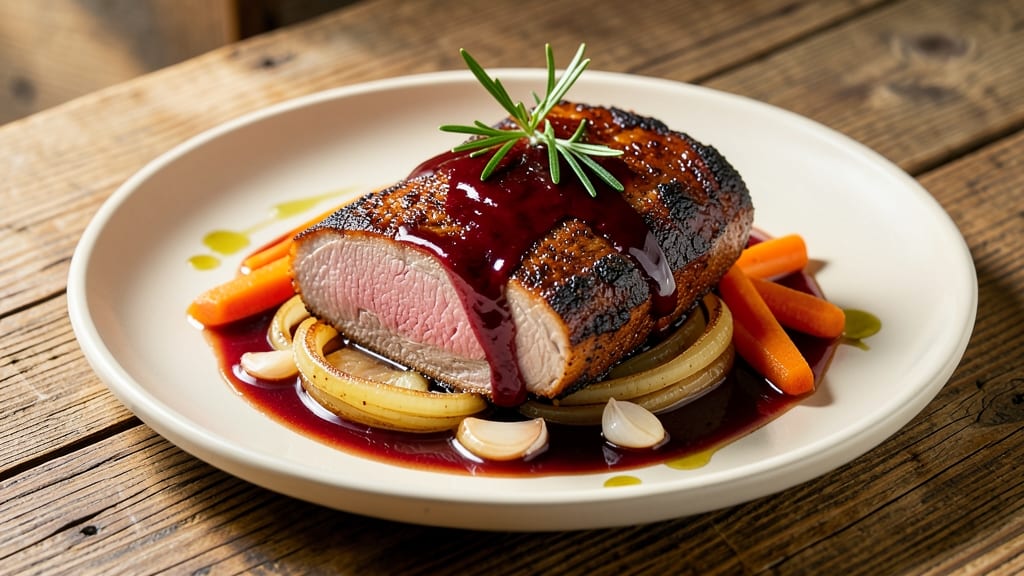
This braised pork loin recipe turns tough cuts into melt-in-your-mouth perfection through slow cooking—just like my grandmother taught me in Georgia’s kitchens. The secret lies in searing first to lock in juices, then simmering until the meat practically falls apart. This method delivers restaurant-quality tenderness without requiring hours of babysitting.
What sets this recipe apart is the balance of rich, caramelized flavors from the braising liquid—red wine, aromatics, and a touch of tomato create depth that elevates simple pork into something extraordinary.
I’ve perfected the timing so it works for weeknight dinners or special occasions, using just a Dutch oven and basic pantry ingredients. The result? Juicy, flavorful pork that’s impossible to resist.
By the time you’re done, you’ll have perfectly tender pork loin swimming in a velvety sauce that’s ideal for serving over mashed potatoes, polenta, or crusty bread. The technique is foolproof, and the reward is a dish that feels like a hug from your favorite chef.
Let’s get started with this timeless method that always delivers.
This braised pork loin keeps well for up to 5 days in the fridge, making it perfect for meal prep or feeding a crowd. The sauce thickens beautifully when reheated, so leftovers taste just as good as the first serving. Trust me—once you try this, you’ll never buy pre-made again.
Ingredients for braised pork loin
Pantry staples and a few fresh herbs transform tough pork into melt-in-your-mouth perfection.
| Ingredient | Amount | Notes |
|---|---|---|
| Pork Loin 🥩 | 2 lb | Center-cut, bone-in preferred |
| Dry Red Wine 🍷 | 1 cup | Bold Cabernet Sauvignon or Merlot |
| Beef Broth 🥄 | 2 cups | Low-sodium preferred |
| Yellow Onion 🧅 | 1 whole | Medium, sliced into wedges |
| Garlic Cloves 🧄 | 6 cloves | Smashed, not minced |
| Carrots 🥕 | 4 whole | Medium, peeled, cut into chunks |
| Tomato Paste 🍅 | 2 tbsp | Smooth, not chunky |
| Fresh Thyme 🌿 | ¼ cup | Leaves only, stems removed |
| Fresh Rosemary 🌿 | ¼ cup | Needles only, chopped |
| Olive Oil 🫒 | ¼ cup | Extra-virgin, for searing |
| Salt 🧂 | 1 ½ tsp | Diamond Crystal kosher salt |
| Black Peppercorns 🌶️ | 1 tsp | Freshly cracked, not ground |
| Bay Leaves 🌿 | 2 whole | Dried, standard size |
| All-Purpose Flour 🌾 | 2 tbsp | For dredging pork |
The pork loin makes all the difference here—center-cut, bone-in stays juicier than boneless. Costco or Whole Foods carry excellent cuts, but your butcher can trim it to size if needed. Look for good marbling; it’s what gives the meat that rich flavor during braising. I always ask for it to be cut about 1.5 inches thick for even cooking. Fresh thyme and rosemary are worth hunting down at a farmers market—they’ve got more aroma than the dried stuff, and you’ll only need a handful. If you’re in a pinch, dried works at one-third the amount, but fresh is ideal for that authentic Georgia kitchen flavor.
No red wine? Beef broth with a splash of balsamic vinegar works in a bind, though the acidity from the wine is key for tenderizing. The tomato paste can be swapped for crushed tomatoes at half the amount, but paste gives that deep, caramelized base. Fresh herbs wilt fast, so if you’re prepping ahead, store them in a damp paper towel in a sealed container for up to 3 days. For the onions and carrots, baby carrots or pre-sliced onions save time—just make sure they’re fresh. The beef broth? Swanson or Pacific Foods are my go-tos for quality, low-sodium options. If you’ve got homemade, even better—just make sure it’s rich and flavorful.
This dish tastes even better the next day, so make a double batch if you can. The braised pork keeps for 5 days in the fridge, and the sauce freezes beautifully for up to 3 months. I like to portion it into meal prep containers—pork and sauce together, reheated with a splash of water or broth. The sauce thickens as it cools, so if it’s too thick when reheating, just add a little liquid. Serve it over mashed potatoes or crusty bread, and you’ve got a weeknight dinner that feels like a restaurant meal.
Why You'll Love This Recipe
- One-Pot Magic: I can throw this together in one pan—no fuss, no extra dishes. Just sear the pork, dump in the wine and broth, and let it do its thing while I grab a glass. The onions and garlic caramelize right there, soaking into the meat like a flavor hug.
- Wine-Soaked Perfection: That dry red wine? It’s not just decoration—it tenderizes the pork and adds a depth that makes it taste like a restaurant dish. Honestly, the first bite always makes me pause and think, Did I really make this?
- Leftover Powerhouse: This is the kind of meal that gets better the next day. I freeze half for a lazy lunch, and the rest? I toss it into tacos or pasta the week after. The pork falls apart so easily, it’s like I’m cheating at meal prep.
- Budget-Friendly Luxury: Pork loin isn’t cheap, but a single roast feeds four people twice. The wine and broth stretch the flavors so far, you’ll feel like you’re splurging without the price tag. My secret weapon for when I want to impress but need to pinch pennies.
Step-by-step instructions for braised pork loin
Here's how to transform tough pork into melt-in-your-mouth tenderness through slow braising.
Prepare the Pork for Even Cooking
Pat the 2 lb pork loin completely dry with paper towels, focusing on the edges and seams. This step is crucial for achieving a golden crust later. Place the pork on a plate and season both sides generously with 1.5 tsp salt and 1 tsp freshly cracked black peppercorns. The salt should cling visibly to the surface.
Dredge the pork in 2 tbsp all-purpose flour, pressing gently to adhere evenly. Shake off any excess flour so it doesn't make the braising liquid cloudy. Let the pork sit at room temperature for 30 minutes while you prepare the vegetables. This ensures even cooking and prevents cold spots in the center.
Sear the Pork for Deep Flavor
Heat 0.25 cup olive oil in a large Dutch oven over medium-high heat until shimmering. Add the pork loin and sear for 4-5 minutes per side until deeply golden brown. Press down gently on the pork during the first minute to prevent curling and ensure even contact with the pan.
Remove the pork and set it aside. The goal here is to create a flavorful crust through the Maillard reaction. If the oil starts smoking excessively, reduce the heat slightly. The pork should release easily from the pan when ready to flip.
Build the Braising Base
In the same Dutch oven, add the sliced 1 whole yellow onion and 4 whole carrots cut into chunks. Cook for 5 minutes until the onions soften slightly. Add the 6 smashed garlic cloves and cook for 30 seconds until fragrant.
Stir in the 2 tbsp tomato paste and cook for 1 minute until it darkens slightly. This creates a rich foundation for the braising liquid. Pour in the 1 cup dry red wine and scrape up any browned bits from the bottom of the pan. Let it simmer for 3 minutes until reduced by half.
Braise Until Fork-Tender
Return the pork to the Dutch oven. Add the 2 cups beef broth, 0.25 cup fresh thyme leaves, 0.25 cup chopped fresh rosemary, and 2 whole bay leaves. The liquid should come about halfway up the sides of the pork. Bring to a gentle simmer.
Cover the Dutch oven and transfer to a preheated 325°F oven. Braise for 2.5 to 3 hours until the pork is fork-tender and the internal temperature reaches 200°F. Check periodically after 2 hours—your oven might run hot, so start checking at the 20-minute mark of the final hour.
Rest and Serve with Sauce
Remove the pork and transfer it to a cutting board. Tent loosely with foil and let it rest for 15 minutes. This resting period allows the juices to redistribute, ensuring each slice remains moist and flavorful.
Skimming the braising liquid of any excess fat, return it to the Dutch oven and simmer over medium heat for 5-7 minutes until slightly thickened. Slice the pork against the grain into 0.5-inch thick pieces and serve with the reduced braising sauce spooned over the top.
Pro Tips For Making Braised Pork Loin
- SEAR THE LOIN FIRST: High heat for 3-4 minutes per side until deep golden—this isn’t just for looks, it locks in flavor and makes the wine reduction stick later. I used to skip this, and the dish always tasted flat until I realized the difference between "cooked" and "seared."
- SWEAT ONIONS LOW AND SLOW: Chop onions into even ¼-inch slices and cook them on medium-low for 8-10 minutes until translucent but not browned—this prevents bitterness and builds a rich base for the wine. After burning a batch when I cranked the heat, I now set a timer and ignore the urge to stir constantly.
- DEGLAZE WITH WINE IMMEDIATELY: As soon as you remove the pork, pour in the red wine hot from the pan—it’ll sizzle and lift up those browned bits (fond) that hold all the flavor. Skipping this step means losing half the depth of taste, and no amount of broth can fix it.
- USE COLD BROTH FOR FINISHING: After the wine reduces, add cold beef broth instead of hot—it cools the braise slightly, preventing the pork from overcooking while it finishes. I learned this from my nonna, who swore by it, and the meat stays tender every time, even when braising for 2+ hours.
Regional styles of this dish
Southern Smothered Style
This is how my grandma made it—simple, hearty, and packed with Southern charm. Start with a 2 lb bone-in pork loin seared in a cast-iron skillet until deeply browned. Instead of wine, use 1 cup apple cider vinegar mixed with 2 cups chicken broth for a tangy twist.
Add 1 sliced onion, 2 sliced bell peppers, and 1 cup corn kernels (fresh or frozen) for a touch of sweetness. Simmer covered for 2 hours until the pork falls apart. The vinegar tenderizes the meat beautifully while keeping it juicy.
Serve over buttermilk biscuits for that classic Southern pairing. 🌽
French-Style Braisée
Inspired by my time in Charleston, this method leans on French technique with a Southern twist. After searing the pork, deglaze with ½ cup dry white wine and ½ cup heavy cream—this creates a velvety sauce.
Add 1 cup pearl onions, 2 cups mushrooms, and 1 tbsp Dijon mustard for depth. Braise at 300°F for 2.5 hours until the pork reaches 200°F internally. The cream adds richness, while the pearl onions caramelize into sweetness.
Finish with a sprinkle of fresh parsley and serve with creamy mashed potatoes. This version feels fancy but is surprisingly easy. 🥖
German Sauerbraten
If you love bold, tangy flavors, this German-inspired variation will change your game. Marinate the pork loin overnight in a mix of 1 cup red wine vinegar, ¼ cup brown sugar, 1 tbsp caraway seeds, and 2 tbsp whole allspice berries.
After searing, add the marinade to the pot along with 1 sliced potato, 1 sliced carrot, and 1 sliced celery stalk (the "holy trinity"). Braise for 3 hours until the pork is fork-tender.
The result? A deeply flavorful, slightly sweet, and tangy dish that feels like a hug. Serve with red cabbage and rye bread for authenticity. 🍖
Cajun Spiced Braise
For those who love heat, this Cajun twist adds a kick while keeping the dish tender. After searing, add 2 tbsp Cajun seasoning (like Penzeys brand) to the pot along with the broth. Include 1 sliced green bell pepper and 1 sliced onion for extra depth.
Braise for 2 hours until the pork is falling apart. The spices infuse the meat and sauce beautifully, creating a dish that’s both bold and comforting. Serve with dirty rice or cornbread to soak up all that flavor.
This version is perfect for those who want a little extra zing. 🌶️
Korean-Inspired Braise
This fusion method brings Korean flavors to the table with a sweet and savory profile. After searing the pork, add 2 tbsp gochujang (Korean chili paste) and 1 tbsp soy sauce to the pot. Include 1 sliced daikon radish and 1 sliced carrot for texture.
Braise for 2.5 hours until the pork is tender. The gochujang adds a deep, slightly spicy sweetness that pairs perfectly with the pork. Serve with steamed white rice and a side of kimchi for a full Korean-inspired meal.
This version is a game-changer for those who love bold, global flavors. 🥢
Nutrition facts
Frequently asked questions
Why does this braised pork loin turn out so tender?
Slow cooking at 325°F for 2.5-3 hours breaks down tough muscle fibers, while the initial sear creates a flavorful crust. The wine and aromatics infuse moisture, keeping the meat juicy. This method mimics traditional Southern techniques that transform tough cuts into melt-in-your-mouth perfection.
Can I use boneless pork loin instead of bone-in?
Yes, but bone-in stays juicier and more flavorful. If using boneless, trim excess fat and consider adding a bone-in cut like a pork shoulder for better results. The cooking time remains the same, but boneless may dry out slightly faster. For best texture, stick with bone-in when possible.
What if my oven isn't exactly 325°F?
Use an oven thermometer to check your actual temperature. If it runs hot, reduce to 300°F and add 15-20 minutes to the cooking time. If it runs cold, increase to 350°F and check for doneness at 2 hours. The key is reaching 200°F internally for perfect tenderness.
How do I make this recipe in a slow cooker?
Sear the pork first, then transfer it to your slow cooker with all ingredients except the bay leaves. Cook on LOW for 6-8 hours or HIGH for 3-4 hours. The pork should still reach 200°F internally. The sauce will be thinner but can be reduced on the stovetop afterward. This method works great for busy weeknights!
What's the best way to reheat leftovers?
Place pork and sauce in an oven-safe dish, cover with foil, and reheat at 300°F for 20-30 minutes until warmed through. For stovetop reheating, use low heat and add a splash of broth or water to prevent drying. Leftovers keep well for 5 days in the fridge or 3 months in the freezer.