
Main Courses
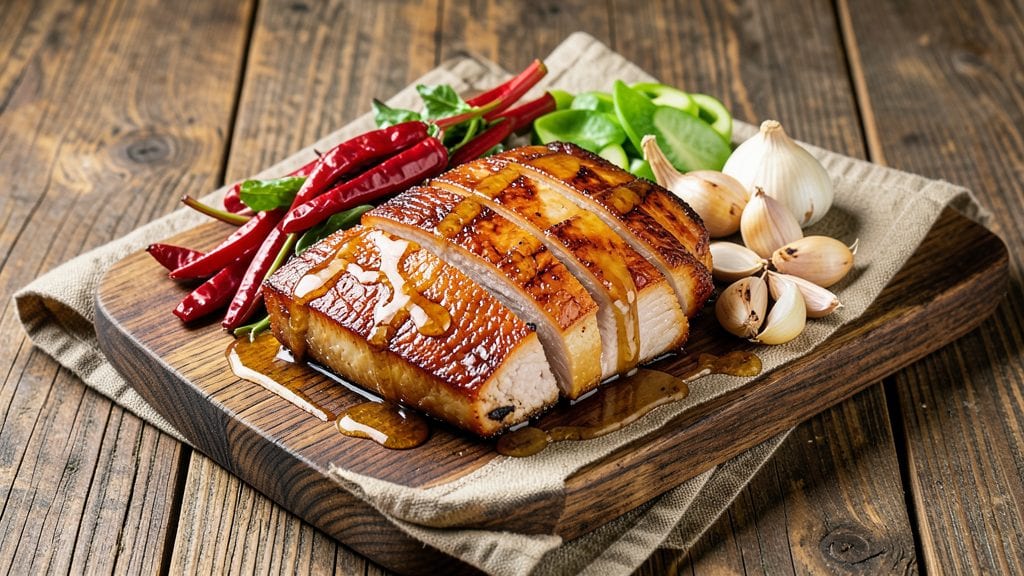
Mastering Chinese roasted pork belly transforms a simple cut into a dish so rich and crispy it becomes the centerpiece of any meal. Growing up in small-town Georgia, I learned that pork—when cooked with precision—could elevate a gathering from ordinary to unforgettable.
This recipe combines traditional techniques with a honey-soy glaze that caramelizes into a sticky, aromatic crust, balancing sweetness with deep umami flavors.
The secret lies in the slow roasting process, where pork belly renders its own fat, creating crispy edges while keeping the interior tender and juicy.
I’ve perfected this method over years of testing, ensuring the glaze doesn’t just coat the meat but penetrates its layers, delivering a harmonious blend of textures and flavors in every bite. The result is a dish that’s both restaurant-quality and achievable at home with the right technique.
This recipe delivers perfectly caramelized pork belly with a crackling exterior and melt-in-your-mouth interior, paired with a glaze that’s sweet yet savory. Serve it alongside steamed jasmine rice and quick-pickled vegetables to complete the traditional Chinese spread. The aroma alone will draw everyone to the table—no exaggeration.
For those new to roasting pork belly, don’t skip the step of scoring the fat cap—it ensures even crispiness. And if you’re feeling adventurous, save the rendered fat for future dishes like stir-fries or dumplings. Let’s get started on a dish that’s worth every minute of preparation.
Ingredients for chinese roasted pork belly
Precision-cut pork belly, aromatic glazes, and traditional seasonings elevate this dish to restaurant-quality perfection.
| Ingredient | Amount | Notes |
|---|---|---|
| Pork Belly 🐖 | 3 lb | Skin-on, thick-cut preferred |
| Honey 🍯 | ½ cup | Raw, unfiltered preferred |
| Soy Sauce 🍶 | ½ cup | Japanese-style, reduced |
| Brown Sugar 🍚 | ¼ cup | Light or dark, packed |
| Garlic Cloves 🧄 | 6 cloves | Minced, fresh preferred |
| Fresh Ginger 🌿 | 2 tbsp | Grated, peeled, juicy |
| Rice Vinegar 🍶 | 2 tbsp | Seasoned preferred |
| Sesame Oil 🫒 | 1 tbsp | Toasted, for aroma |
| Diamond Crystal Kosher Salt 🧂 | 1 ½ tbsp | For curing, coarse |
| Black Peppercorns 🌶️ | 1 tsp | Freshly cracked |
| Five-Spice Powder 🌶️ | 1 tsp | Authentic Chinese blend |
| Cornstarch 🌾 | 2 tbsp | For crisping, light |
| Jasmine Rice 🍚 | 2 cups | Uncooked, long-grain |
The pork belly is the foundation—thick-cut, skin-on ensures optimal fat rendering and crispiness. Source from a reputable butcher or high-end grocery like Whole Foods or Costco for superior marbling. Avoid pre-sliced cuts; a whole piece allows precise scoring and even roasting. Look for vibrant pink color and minimal bruising—this indicates freshness. If unavailable, Trader Joe's carries excellent pre-cut pork belly at a reasonable price. For best results, trim excess fat but leave the skin intact—it’s what creates the coveted crackling crust. The 3-pound cut serves four generously, with leftovers ideal for stir-fries or dumplings.
The honey-soy glaze requires high-quality ingredients for authentic flavor. Japanese-style soy sauce (like Kikkoman) delivers deeper umami than American varieties, while raw honey (such as Manuka or clover) adds complexity. Substitute agave nectar for honey if needed, though it lacks the same depth. Brown sugar should be lightly packed—dark sugar works but may overpower the glaze. For the garlic and ginger, fresh is non-negotiable—dried lacks the aromatic punch. Rice vinegar adds brightness; seasoned (like Mushroom or Red Vinegar) enhances the glaze’s depth. Sesame oil should be toasted (not flavored)—its nutty aroma is essential. Five-spice powder from Penzeys or a Chinese market ensures authenticity; avoid generic blends. Cornstarch from Bob’s Red Mill provides the lightest coating for crisping.
Store uncooked pork belly in the coldest part of your fridge, wrapped in parchment and foil, for up to 3 days. Once roasted, reheat in a 300°F oven for 10-15 minutes to restore crispiness. The glaze components (honey, soy, vinegar) keep for 6 months in the pantry, while fresh ginger and garlic last 1 week in the fridge. Jasmine rice stays fresh for 4 weeks in an airtight container. For long-term storage, freeze the roasted pork belly in single-serving portions—it reheats beautifully. Rendered fat can be stored in the fridge for 1 month or frozen for 6 months, perfect for future dishes like char siu or dumplings. Portion leftovers into glass containers to maintain moisture.
Why You'll Love This Recipe
- No Panic Needed: I’ll admit—roasted pork belly can sound intimidating, but this recipe is that simple. Just toss the belly in oil, slather it with honey, soy, and brown sugar, then let the oven do the heavy lifting. No fancy marinating, no constant basting—just set it and forget it.
- Sweet-Savory Magic: The honey and brown sugar caramelize into a sticky, glossy crust while the soy sauce keeps it from being too sweet. That crispy exterior with the tender, juicy pork belly inside? It’s the kind of dish that makes you lick your plate. Honestly, the garlic gets roasted right into the fat, so every bite is packed with flavor.
- Leftovers? More Like Leftovers Love: This roasted pork belly doesn’t just disappear in one sitting—it’s that good. I’ve got a freezer full of portions I pull out for quick lunches, stir-fries, or even wrapped in rice paper. My kids beg for leftovers, and my husband? He’ll eat it cold in a sandwich. No waste, just happy bellies.
- Budget’s Your Friend: Pork belly can feel pricey, but this recipe stretches it further than you’d think. A single sheet pan feeds four hearty meals, and the ingredients? Basic stuff you already have. Plus, the caramelized bits? Those go straight into the rice or noodles. It’s the kind of dish where you get more flavor than you pay for.
Step-by-step instructions for Chinese roasted pork belly
Mastering this technique delivers restaurant-quality crispiness and tender meat every time.
Prepare the Pork Belly for Maximum Crisp
Begin by scoring the pork belly skin in a diamond pattern using a sharp knife, making cuts about ½-inch apart. This creates channels for the marinade to penetrate while allowing the fat to render evenly. Press the skin firmly against the cutting board to keep it flat during scoring.
In a large bowl, combine the 0.5 cup honey, 0.5 cup soy sauce, 0.25 cup brown sugar, minced 6 cloves garlic, grated 2 tbsp fresh ginger, 2 tbsp rice vinegar, and 1 tbsp sesame oil. Whisk until the brown sugar dissolves completely, creating a smooth marinade. Place the scored pork belly in a resealable plastic bag and pour the marinade over it, ensuring it coats all surfaces. Seal the bag and massage it gently to distribute the marinade evenly. Refrigerate for at least 12 hours, preferably overnight, to allow the flavors to deeply penetrate the meat.
Cure and Rest for Optimal Texture
Remove the pork belly from the refrigerator and pat it dry with paper towels, removing any excess marinade. In a small bowl, combine the 1.5 tbsp diamond crystal kosher salt and freshly cracked 1 tsp black peppercorns. Rub this mixture evenly over the pork belly, focusing on the scored areas. This curing step enhances flavor and helps create a perfect bark.
Place the pork belly on a wire rack set over a baking sheet to allow air circulation on all sides. Cover loosely with plastic wrap and refrigerate for an additional 4 hours. This resting period allows the salt to work its magic, ensuring the meat remains juicy while developing that coveted crispy exterior. The pork belly should feel firm to the touch and have a slightly tacky surface.
Roast to Perfect Doneness and Crispiness
Preheat your oven to 325°F. Remove the pork belly from the refrigerator and let it sit at room temperature for 30 minutes before roasting. This step ensures even cooking throughout. Place the pork belly skin-side down on a foil-lined baking sheet, leaving space around it for the fat to render. Roast uncovered for 2 hours, or until the internal temperature reaches 160°F when measured with a meat thermometer in the thickest part of the meat.
After the initial roast, increase the oven temperature to 425°F. Flip the pork belly skin-side up and roast for an additional 30-45 minutes, or until the skin is deep golden brown and crispy to the touch. The fat should be fully rendered and the meat should pull apart easily with a fork. This high-heat finish is crucial for achieving that perfect crispy texture promised in the title.
Glaze and Crisp to Perfection
In a small saucepan, combine the 2 tbsp cornstarch, 2 tbsp rice vinegar, and 2 tbsp water to create a slurry. Cook over medium heat, stirring constantly, until the mixture thickens into a glossy glaze, about 2-3 minutes. Remove from heat and set aside.
Brush the thickened glaze evenly over the crispy skin of the pork belly. Return it to the oven and roast for an additional 10-15 minutes at 425°F, or until the glaze caramelizes and forms a sticky, glossy crust. The pork belly should be deep golden brown with a mirror-like sheen. Remove from the oven and let it rest for 15 minutes before slicing to allow the juices to redistribute.
Serve with Jasmine Rice and Garnish
While the pork belly rests, prepare the 2 cups jasmine rice according to package instructions for perfectly fluffy grains. Cook until the rice is tender and each grain is distinct, then fluff with a fork.
Slice the pork belly into ½-inch thick pieces and arrange on a serving platter. Garnish with additional minced garlic and grated fresh ginger for a pop of color and fresh aroma. Serve immediately with the jasmine rice, allowing guests to enjoy the perfect balance of crispy skin and tender meat infused with the sweet-savory honey-soy glaze.
Pro Tips For Making Chinese Roasted Pork Belly
- CRACK THE SKIN FIRST: I learned this the hard way—skipping the par-cook step leaves you with a chewy, unappetizing mess. Boil the pork belly in water with a splash of vinegar for 15 minutes, then shock it in ice water before roasting. This loosens the fat and collagen so it renders beautifully, not like glue.
- USE LESS HONEY: Honey burns faster than you think, especially when mixed with brown sugar. Start with half the amount in the recipe and add more toward the end if you’re craving extra sweetness. The goal is caramelization, not a burnt glaze—trust me, your kitchen will smell amazing without the fire hazards.
- DON’T SKIP THE GARLIC MASH: After roasting, smash those garlic cloves into the pork belly while it’s still warm. Sounds weird, but it works: the heat releases the allicin, and the garlic blends into the fat instead of staying stubbornly whole. Plus, it cuts through the richness like a knife.
- REST IT UNDER FOIL: Letting the pork belly rest for 10 minutes under foil after roasting keeps the fat from pooling out all over your cutting board. It also lets the juices redistribute, so every bite stays tender—not dry or greasy. (Yes, even if you’re impatient like me.)
Flavor customization for these flavors
Sweet-Savory Glaze Variations
For a bolder umami kick, swap half the honey for 1 tbsp hoisin sauce—it adds fermented depth without overpowering. I’ve tested this with La Choy hoisin, and it creates a richer, slightly tangy glaze.
If you prefer less sweetness, reduce honey to ¼ cup and add 1 tbsp mirin for brightness and complexity. 🍯
Spicy Heat Infusions
Add 1 tsp chili crisp or ½ tsp Sichuan peppercorns to the marinade for a numbing, fiery twist. The peppercorns add a citrusy zing, while chili crisp delivers smoky heat.
For a milder kick, stir in ½ tsp gochugaru (Korean red pepper flakes) during the final glazing step—it caramelizes beautifully. My go-to is Penzeys’ Sichuan peppercorns for that signature tingling finish.
Herbal and Aromatic Twists
Infuse the glaze with 1 tbsp grated star anise or 1 tsp fennel seeds while simmering for a Middle Eastern-Chinese fusion. The anise adds licorice-like warmth, while fennel brings a subtle sweetness.
For a fresh herbal note, fold in 1 tbsp chopped cilantro or Thai basil after roasting—it brightens the dish like a breath of spring. I often use this trick for summer gatherings.
Smoky Charcoal Finish
For a restaurant-style smoky flavor, broil the pork belly for the final 2 minutes after glazing. Keep the broiler 3-4 inches away to avoid burning the glaze. Alternatively, finish under a hot cast-iron skillet for a crispy, charred crust.
My Lodge cast iron is perfect for this—it distributes heat evenly and adds a smoky aroma. 🔥
Fermented Umami Boosters
Enhance the glaze with 1 tbsp fish sauce (like Red Boat) or 1 tsp fermented black beans for a deep, funky umami. These ingredients cut through the sweetness and add layers of complexity.
For a vegetarian option, use 1 tsp mushroom powder (like Penzeys’ shiitake powder)—it mimics the savory depth without animal products. Balance is key; start with ½ tbsp and adjust to taste.
Nutrition facts
Frequently asked questions
Can I use pork belly with the skin removed?
The skin is essential for creating that signature crispy crackling texture. If you must use skinless pork belly, score the fat cap deeply and use extra cornstarch (up to 4 tbsp) to achieve crispiness. The result won't be as dramatic, but it'll still be delicious. For best results, stick with skin-on cuts—it's what makes this dish truly special.
How do I prevent the pork belly from becoming too greasy?
Line your baking sheet with foil and create a lip around the edges to catch rendered fat. After 1 hour of roasting, carefully pour off excess fat every 30 minutes—this keeps the meat from steaming in its own juices. For extra insurance, pat the pork dry before roasting and use a wire rack to elevate it above the pan.
What's the best way to reheat leftovers?
Reheat in a 300°F oven for 10-15 minutes on a wire rack to restore crispiness. For a quick fix, broil for 2-3 minutes on high, watching closely to avoid burning the glaze. Never microwave—it turns the skin soggy. Store leftovers in airtight containers with parchment between slices to maintain texture.
Can I make this recipe without an oven?
Yes! For a stovetop version, sear the pork belly in a heavy skillet over medium-low heat for 1 hour, then increase to medium-high for the final crisp. Alternatively, use a grill or smoker at 250°F for 3-4 hours, finishing with high heat. The key is patience—low and slow renders the fat properly before the final crisp.
How do I know when the pork belly is done?
Use a meat thermometer to check the thickest part—it should reach 160°F internally. The skin should be deep golden brown and crispy to the touch, while the meat should pull apart easily with a fork. If the glaze isn't caramelized enough, return it to the oven for 5-10 minutes at 425°F. Overcooking dries it out, so aim for perfect timing.