
Side Dishes
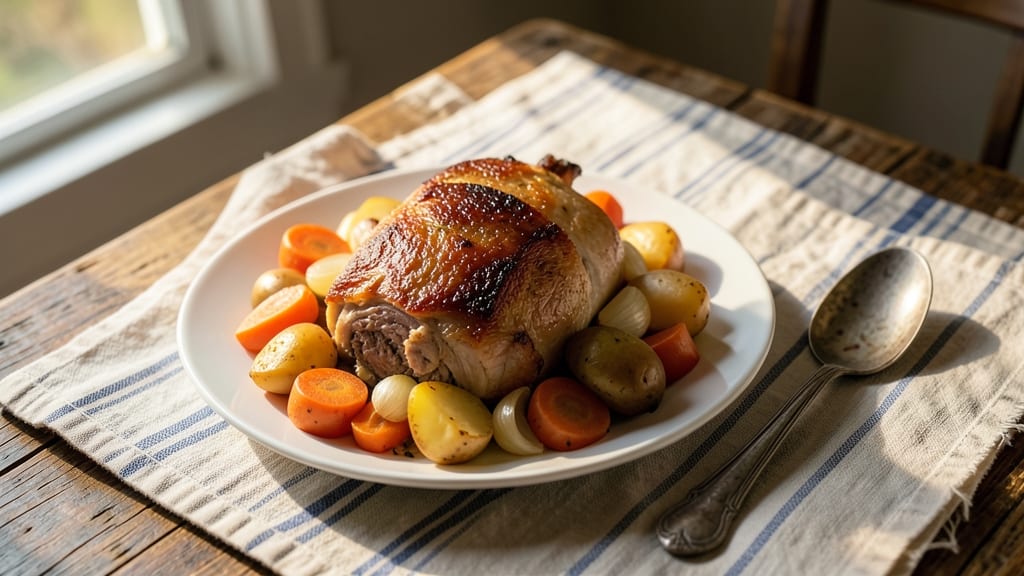
This Dutch oven pork roast with vegetables recipe turns weeknight cooking into a hands-off, crowd-pleasing masterpiece—just season, sear, and let the oven do the work. Growing up in small-town Georgia, I learned that slow-roasted pork with vegetables creates meals that feed families and leave the kitchen spotless.
This method preserves moisture while caramelizing edges, turning tough cuts into tender perfection.
The Dutch oven’s heavy cast iron ensures even heat distribution, so every bite of pork stays juicy while root vegetables develop deep, caramelized flavors. We’ll use simple seasonings—salt, pepper, and a touch of garlic—to let the natural richness shine, while potatoes, carrots, and onions absorb all the savory juices.
The result? A foolproof dinner that requires minimal prep but delivers restaurant-quality results.
By the time you pull this out of the oven, you’ll have succulent pork that falls apart at the touch, vegetables with crisp-tender edges, and a pan full of golden-brown fond to deglaze into a rich sauce.
No flipping, no fuss—just a complete meal in one pot, ready to serve straight from the table. Here’s how to make it happen.
This recipe scales effortlessly for gatherings, and the leftovers reheat beautifully for lunches. Whether you’re feeding a family or hosting a dinner party, the Dutch oven handles it all without extra dishes. Let’s get started—your taste buds (and your cleanup routine) will thank you.
Ingredients for dutch oven pork roast with vegetables
Big batch, big flavors—this Dutch oven pork roast turns humble ingredients into a crowd-pleasing feast.
| Ingredient | Amount | Notes |
|---|---|---|
| Bone-In Pork Shoulder 🐷 | 3 ½ lb | With skin, cut into 2-inch chunks |
| Russet Potatoes 🥔 | 3 lb | Cut into 1.5-inch chunks |
| Carrots 🥕 | 3 lb | Cut into 2-inch sticks |
| Yellow Onions 🧅 | 2 whole | Cut into wedges |
| Garlic Cloves 🧄 | 6 cloves | Minced, for aromatic base |
| Dry Mustard 🌿 | 1 tbsp | For tenderizing pork |
| Kosher Salt 🧂 | 1 ½ tbsp | Adjust to taste |
| Black Pepper 🌶️ | 1 tbsp | Freshly ground preferred |
| Unsalted Butter 🧈 | ½ cup | Cubed for browning |
| Apple Cider Vinegar 🍎 | ½ cup | For tenderizing |
| Chicken Broth 🍲 | 1 ½ cups | Low-sodium preferred |
| Fresh Thyme 🌿 | 1 tbsp | Or 1 tsp dried |
The pork shoulder is your secret weapon here. Bone-in cuts stay juicier than boneless, and the bone adds rich flavor to the broth. I always buy from Costco when I’m prepping for a crowd—they sell it pre-cubed, which saves 20 minutes of chopping. Look for good marbling—it’s what keeps the meat tender as it slow-cooks. If you’re short on time, pre-cut pork shoulder from the deli counter works just as well. Just make sure it’s not pre-marinated with salt, which can mess with your seasoning balance.
Potatoes and carrots are the stars of the side dish, but you can swap them out if needed. Sweet potatoes add natural sweetness, or parsnips bring earthy depth. No fresh thyme? Dried thyme at half the amount works fine—just toast it in the butter first to wake up the flavor. The apple cider vinegar might seem odd, but it tenderizes the pork beautifully and adds a nice tang to the sauce. If you can’t find it, white wine vinegar works in a pinch. And if you’re worried about the broth being too salty, low-sodium chicken broth is your friend—just taste as you go.
This dish tastes even better the next day, honestly. Let it rest 10 minutes before serving so the juices redistribute—trust me on this. Store leftovers in the fridge for 4-5 days or freeze for up to 3 months. I like to portion it into containers so lunches are sorted for the week. The veggies crisp up nicely when reheated, and the pork stays moist. If you’re feeding a bigger crowd, double the broth and vinegar—it’ll keep everything juicy without drying out. And don’t skip the butter browning step; it’s what gives the sauce its rich, nutty depth.
Why You'll Love This Recipe
- One-Pot Magic: I swear by this recipe when I don’t want to wash a million dishes. The pork shoulder, potatoes, carrots, and onions all cook together in the same Dutch oven—no extra pans, no fuss. Just dump, season, and let it do its thing while I sip wine and pretend I’m not cooking.
- Crispy-Creamy Perfection: That bone-in pork shoulder? It renders down into golden, crackling fat while staying juicy inside, and the potatoes? They get tender with crispy edges—like a hug from a Sunday dinner. Honestly, the garlic and onions caramelize into something so rich, I’ve caught myself closing my eyes mid-bite.
- Leftovers That Don’t Suck: Between us, most roasts leave me with sad, dry meat the next day. Not this one. The pork stays moist, the veggies hold their shape, and I’ve turned it into sandwiches, tacos, and even a hash the next morning. It’s the only roast I actually look forward to reheating.
- Budget Meal for Crowds: A bone-in pork shoulder is cheaper than chicken thighs, and it feeds six without breaking the bank. Add the potatoes and carrots, and suddenly you’ve got a hearty, filling meal that makes you feel like you’re feeding an army—even if it’s just your family. (Yes, even on a Tuesday night.)
Step-by-step instructions for Dutch oven pork roast with vegetables
This hearty one-pot meal comes together with minimal cleanup and maximum flavor.
Sear the Pork Shoulder in the Dutch Oven
Place your Dutch oven over medium-high heat. Add the cubed bone-in pork shoulder in a single layer, letting it sear undisturbed for 5-6 minutes until a deep golden brown crust forms. This step builds incredible flavor—don't rush it.
Once browned on one side, flip the pork pieces and repeat on the second side. As they cook, you'll hear the fat sizzling and smell that irresistible sear. This is where the magic begins—the crust locks in juices while developing rich caramelized flavors.
Remove the pork from the Dutch oven and set it aside. You'll return it later, but first, we need to build the flavor base for the vegetables.
Build the Vegetable and Aromatic Base
In the same Dutch oven (no need to clean it—the browned bits are flavor gold), add the cubed russet potatoes, carrot sticks, and onion wedges. Stir gently to distribute them evenly, then sprinkle with the 1 tablespoon of dry mustard, 1.5 tablespoons of kosher salt, and 1 tablespoon of black pepper.
Pour in the 0.5 cup of apple cider vinegar and the 1.5 cups of chicken broth. The vinegar will help tenderize the vegetables while adding a subtle tang. Add the 6 minced garlic cloves and 1 tablespoon of fresh thyme, stirring everything together. The aromatics should become fragrant within 2-3 minutes.
Bring the mixture to a gentle simmer, then reduce heat to medium-low. Here's the thing—you want the vegetables to cook slowly and evenly, absorbing all those delicious flavors from the pork and aromatics.
Return the Pork and Braise Until Tender
Carefully return the seared pork shoulder pieces to the Dutch oven, nestling them among the vegetables. The goal is to have everything cook together in the same juices, creating a rich, flavorful broth that will baste the meat.
Cover the Dutch oven with its lid and transfer it to a preheated 325°F oven. Here's where patience pays off—braise the pork for 3 to 3.5 hours, until the pork is fork-tender and easily pulls apart. You'll know it's done when the internal temperature reaches 195-205°F at the thickest part of the meat.
About halfway through cooking (around 1.5 to 2 hours), add the 0.5 cup of cubed unsalted butter to the Dutch oven. This will melt into the braising liquid, creating a luscious, velvety sauce that coats every bite. Stir it in gently and continue cooking.
Rest and Serve with Pan Sauce
Once the pork is tender, carefully remove it from the Dutch oven and let it rest on a cutting board for 15 to 20 minutes. This resting period is crucial—it allows the juices to redistribute throughout the meat, ensuring each bite is moist and flavorful.
While the pork rests, skim any excess fat from the surface of the braising liquid in the Dutch oven. Then, return the Dutch oven to the stovetop over medium heat and let the sauce reduce slightly, thickening it into a glossy consistency. If it's too thin, let it simmer uncovered for a few minutes to concentrate the flavors.
Slice the pork shoulder against the grain into ½-inch thick slices and serve it directly from the Dutch oven, spooning the rich vegetable and pork sauce over the top. The vegetables should be tender but still hold their shape, and the sauce should coat everything beautifully. This one-pot meal is perfect for feeding a crowd—just be ready for everyone to ask for seconds!
Pro Tips For Making Dutch Oven Pork Roast With Vegetables
- SEAR THE PORK FIRST: Hit that pork shoulder with a screaming-hot Dutch oven—no skimming the oil—until it’s deep golden brown in 3-4 minutes per side. I used to rush this, and the meat never got that crispy crust that makes the whole dish sing. (Yes, even if you're impatient like me.)
- CUT POTATOES UNEVENLY: Rough up those Russets with a knife instead of slicing them perfectly—think 1-inch chunks with jagged edges. They’ll brown faster and soak up the pork juices better, giving you that creamy, caramelized texture instead of sad, watery spuds.
- DON’T OVERCROWD THE VEGETABLES: Layer the onions, carrots, and potatoes in a single layer at first, then add another if needed. I learned this the hard way—when I packed them in tight, the bottom veggies turned to mush while the top stayed raw. (Your future self will thank you.)
- BASTE WITH THE BROTH: After the initial sear, pour in just enough broth to come halfway up the pork—about 1 cup—and let it bubble for 5 minutes. Then spoon that hot liquid over the meat every 20 minutes. It’s lazy basting, but it keeps the pork juicy without extra effort.
Troubleshooting this dish
Pork Not Tender Enough
If your pork feels tough instead of meltingly tender, you likely didn't cook it long enough or used the wrong cut. Bone-in pork shoulder is your best bet—it stays juicy during long braising. For a 3.5 lb cut, plan for 3-3.5 hours at 325°F.
Use a meat thermometer to check the internal temp: it should reach 195-205°F at the thickest part. If you're short on time, try a 2-hour cook at 350°F, but monitor closely to avoid drying.
Another common issue is overcrowding the Dutch oven. If too many pork pieces are packed in, they'll steam instead of sear. Arrange them in a single layer when searing, and don't overfill the pot with vegetables—leave room for the meat to breathe.
I once rushed a batch and ended up with pork that was more chewy than tender. Lesson learned: patience is key with pork! 💡
Vegetables Too Soft
Overcooked vegetables are a classic Dutch oven pitfall. The potatoes and carrots should be tender but still hold their shape—think "fork-tender," not mushy. If they're turning to mush, you've likely cooked them too long. For this recipe, the vegetables should cook alongside the pork for about 2.5-3 hours total.
If you're worried, check them at the 2-hour mark and adjust oven temp to 300°F if needed to slow cooking.
To prevent this, cut your vegetables evenly—aim for 1.5-inch chunks for potatoes and 2-inch sticks for carrots. Smaller pieces cook faster, so adjust accordingly.
I like to add the butter halfway through cooking (around 1.5 hours) to create a protective layer that keeps the veggies from breaking down too quickly. 🥔
Sauce Too Thin or Watery
A thin, watery sauce usually means you added too much liquid or didn't reduce it enough. This recipe calls for 1.5 cups chicken broth plus 0.5 cup vinegar—that's the ideal amount for a 3.5 lb pork shoulder. If your sauce is still too thin after braising, don't panic.
Simply remove the pork and vegetables, then return the Dutch oven to the stovetop over medium-high heat to reduce the sauce by about half. Stir occasionally and let it bubble away until it thickens to a glossy consistency.
For extra richness, skim off any excess fat from the surface before reducing. If you're still struggling, try adding 1 tablespoon cornstarch mixed with 2 tablespoons cold water to the sauce and simmer for another 2-3 minutes.
This acts as a natural thickener without altering the flavor. Pro tip: Always taste as you go—adjust seasoning with salt or a splash of vinegar if needed. 🍲
Dutch Oven Too Hot
If your pork is drying out or the vegetables are burning, your oven might be running too hot. Dutch ovens are designed for even heat distribution, but some ovens (especially older models) can have hot spots.
Preheat your oven to 325°F and place the Dutch oven on the middle rack—this ensures consistent cooking. If you notice the edges browning too quickly, reduce the oven temp to 300°F for the last 30 minutes of cooking.
Another trick I learned from Master Chef Chen is to tent the Dutch oven with aluminum foil during the last hour of cooking. This traps steam and keeps the pork moist while still allowing it to cook through.
Just make sure to remove the foil for the final 15 minutes so the top can crisp slightly. And always check your oven's accuracy with a thermometer—many home ovens run 25°F hotter or colder than the set temperature. ⚡
Nutrition facts
Frequently asked questions
Can I use boneless pork loin instead of bone-in pork shoulder?
While it's possible, I don't recommend it for this recipe. Bone-in pork shoulder stays juicier during long braising because the bone helps retain moisture. If you must use boneless pork loin, cook it at 350°F for only 1.5-2 hours to avoid drying out, and add the butter later to compensate for lost fat. The texture will be more like roasted pork than pulled pork.
How do I adjust this recipe for a smaller crowd?
For 4 servings, reduce the pork to 1.5 lbs and halve all other ingredients. Keep the same cooking time at 325°F, but check the pork at 1.5 hours since smaller pieces cook faster. A 5-quart Dutch oven works perfectly for this smaller batch—just don't overcrowd the vegetables.
Can I make this dish ahead of time?
This recipe actually tastes better the next day. Cook it completely, then refrigerate the entire Dutch oven (covered) for up to 5 days. Reheat gently in the oven at 300°F for 30-45 minutes, covered, until warmed through. The flavors meld even more overnight, and the sauce thickens beautifully.
What vegetables can I substitute if I don't have potatoes or carrots?
Swap potatoes for sweet potatoes or butternut squash (cut into 1-inch cubes), and carrots for parsnips or turnips. For extra heartiness, add 1 lb Brussels sprouts (halved) or 1 head cauliflower (cut into florets). Just adjust cooking time—denser veggies like squash need 10-15 minutes longer.
Why does my pork turn out dry even when I follow the recipe?
Dry pork usually means one of three things: overcooking, cutting against the grain incorrectly, or using the wrong cut. Always check internal temp with a thermometer (195-205°F), and slice against the grain to shorten muscle fibers. If using boneless pork, reduce cooking time by 30-45 minutes. Also, never skip the butter addition—it creates a protective layer that keeps meat moist.