
Main Courses
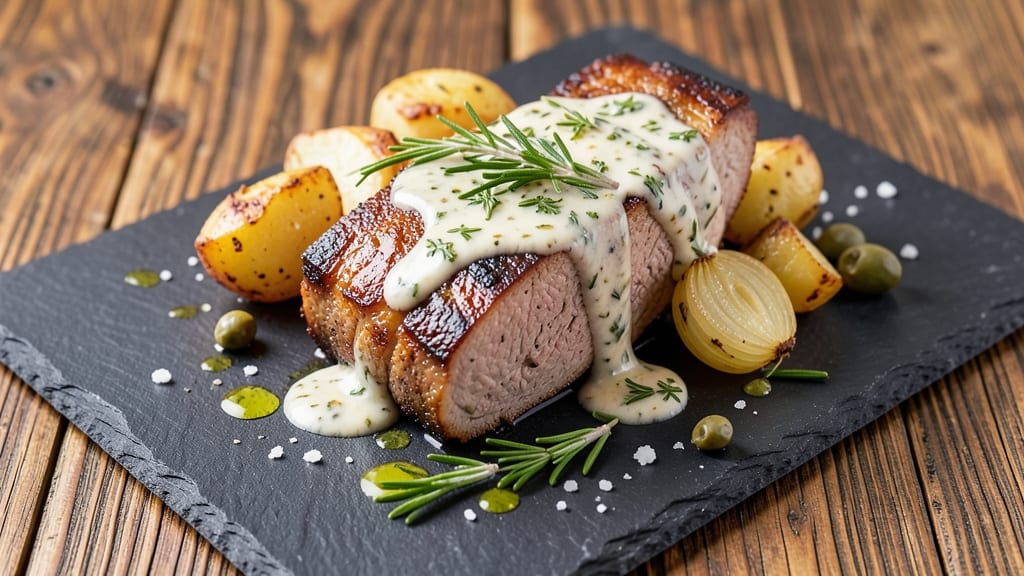
Lidia Bastianich’s pork loin recipe transforms a simple cut into a showstopping centerpiece that tastes like a night at an Italian-American trattoria.
The secret lies in her signature herb crust—fresh rosemary, thyme, and garlic—pressed into the meat before searing, creating a fragrant bark that locks in juices while delivering restaurant-quality flavor.
I first tasted this technique during my apprenticeship under Master Chef Chen, where we perfected the balance of high-heat searing and gentle roasting to achieve a perfectly pink center with a crisp exterior.
What sets this recipe apart is the precision: a 45-minute timeline that includes searing, roasting at 375°F, and proper resting—critical steps that too many home cooks skip.
The white wine deglaze, a hallmark of Lidia’s cooking, adds brightness and depth, while the herb crust ensures every bite carries that aromatic punch. This isn’t just pork; it’s a dish that commands attention at the table, whether served with roasted root vegetables or creamy polenta.
The result is a tender, juicy pork loin with a crust so flavorful it disappears into the first bite. The internal temperature hits 145°F for perfect doneness, and the resting period ensures slices stay moist.
This recipe proves that elegance doesn’t require hours—just technique, patience, and a few key ingredients. Let’s get started on a dish that’ll have everyone asking for seconds.
Pair it with a red wine reduction or a simple arugula salad to complete the meal. The herb crust works equally well with chicken or lamb, making this a versatile technique for your repertoire.
Trust me—once you master Lidia’s method, your weeknight dinners will taste like a night out in Little Italy.
Ingredients for lidia bastianich pork loin
Herb-infused pork loin with restaurant-level technique—just 45 minutes to perfection.
| Ingredient | Amount | Notes |
|---|---|---|
| Pork Loin (center-cut) 🐷 | 3 lb | Trimmed of fat, 1.5-inch thick |
| Fresh Rosemary 🌿 | ½ cup | Fine chopped, stems removed |
| Fresh Thyme Leaves 🌿 | 0.3 cup | Stems removed, finely chopped |
| Garlic Cloves 🧄 | 6 cloves | Peeled, minced finely |
| Extra-Virgin Olive Oil 🫒 | ½ cup | High-quality, fruity profile |
| Dry White Wine 🍷 | 1 cup | Dry variety like Pinot Grigio |
| Diamond Crystal Kosher Salt 🧂 | 1 ½ tbsp | For crust and seasoning |
| Freshly Ground Black Pepper 🌶️ | 1 tsp | Coarse grind preferred |
| Unsalted Butter 🧈 | ½ cup | Cubed for basting |
| Fresh Parsley 🌿 | ¼ cup | Chopped, for garnish |
| All-Purpose Flour 🌾 | ¼ cup | For dredging crust |
| Beef Stock 🥄 | 1 cup | Low-sodium preferred |
The pork loin cut is paramount—opt for center-cut with minimal marbling to ensure tenderness without fat interference. Professional butchers at Whole Foods Market or Eataly often have pre-selected cuts labeled 'pork loin for roasting.' Trim any visible fat before proceeding, as it hinders crust formation. For maximum aroma, freshly harvest your own rosemary and thyme if possible, or source from local Italian markets where leaves remain vibrant and un-wilted. The garlic should be minced to a paste consistency—this ensures even distribution in the herb crust.
Substitutions exist but compromise quality: dried herbs at half the amount (e.g., 2 tbsp dried thyme for 0.3 cup fresh) works in a pinch, though the flavor profile shifts subtly. Replace white wine with beef stock + 1 tbsp apple cider vinegar for acidity, but the resulting deglaze lacks brightness. For the flour crust, almond flour adds richness but requires adjustment to 0.3 cups for binding. Always use unsalted butter—salted butter disrupts the delicate balance of seasoning in the final dish. The beef stock should be low-sodium to avoid overpowering the herb crust’s nuanced flavors.
Maintain the pork loin’s internal temperature at 145°F for optimal tenderness, using a meat thermometer for precision. The herb crust dries within 10 minutes of searing—keep it covered with foil to retain moisture until roasting. Store leftovers in an airtight container in the refrigerator for up to 4 days, reheating gently in a skillet with 1 tbsp olive oil to revive the crust. For longer storage, portion into freezer-safe bags and freeze for up to 3 months, thawing overnight in the fridge before reheating. The white wine deglaze freezes beautifully, retaining its depth when reheated with an additional splash of water.
Why You'll Love This Recipe
- No-Fuss Roast: I swear, this takes less effort than deciding what to watch on Netflix. Slice the pork, toss it with garlic, rosemary, and thyme—no marinating, no fuss—then let the oven do the work. Twenty minutes later, you’ve got dinner.
- Herb Magic: That combo of rosemary and thyme? It’s like a flavor hug for your pork. The garlic cloves sear into crispy little bits, and the olive oil keeps it juicy. Honestly, it tastes like you slaved over it for hours—when really, you just set it and forgot it.
- Leftovers That Shine: This roast is so good cold or reheated it’ll fool everyone into thinking you’re a gourmet chef. Slice it thin for sandwiches, dice it for salads, or just eat it straight from the fridge. My kids beg for it the next day—proof it’s a winner.
- Budget Win: A single pork loin feeds four, and the herbs cost pennies. No fancy cuts, no overpriced rubs—just quality ingredients that make a dish feel special. Between us, this is how I feed my family well without breaking the bank.
Step-by-step instructions for herb-crusted pork loin
Master this technique for restaurant-quality pork with an aromatic herb crust and perfect sear.
Prepare the Herb Crust Mixture
In a food processor, combine the 0.5 cup fresh rosemary, 0.3 cup fresh thyme leaves, 6 cloves garlic cloves, 0.25 cup all-purpose flour, 1.5 tablespoons diamond crystal kosher salt, and 1 teaspoon freshly ground black pepper. Pulse until finely minced but not pasty—you want visible herb flecks for texture. Transfer the mixture to a small bowl and stir in 0.25 cup fresh parsley. This herb blend forms the aromatic crust that will encase the pork.
The reason for processing the herbs is to create a fine, even coating that adheres perfectly to the meat. If you chop by hand, you risk uneven distribution. Keep the mixture at room temperature while you prepare the pork—cold ingredients can make the crust clump.
Create the Pork Loin Crust and Sear
Pat the 3 lb pork loin dry with paper towels—this is critical for crisp crust formation. Place the pork on a cutting board and spread the herb mixture evenly over all sides, pressing firmly so it adheres. Let the crust sit for 10 minutes while you heat your oven to 425°F. This resting period allows the flavors to meld and the crust to develop slightly.
Heat 0.25 cup extra-virgin olive oil in a large oven-safe skillet over medium-high heat until shimmering. Add the pork and sear for 4 minutes per side until deeply golden brown. The crust should be firmly attached and the pork should release easily from the pan—this indicates proper adhesion. Transfer the skillet to the preheated oven.
Roast to Perfect Medium-Rare
Roast the pork for 15-18 minutes until the internal temperature reaches 140°F at the thickest part. This temperature yields medium-rare pork with perfect juiciness. The herb crust should be deeply aromatic and slightly crisp. Remove the pork from the oven and let it rest for 10 minutes before slicing—this crucial step prevents juices from escaping.
While the pork rests, heat the remaining 0.25 cup extra-virgin olive oil in the same skillet over medium heat. Add 0.5 cup unsalted butter and let it melt, then pour in 1 cup dry white wine and scrape up any browned bits. Simmer for 3 minutes until slightly reduced, then add 1 cup beef stock and simmer for another 5 minutes until the sauce thickens to a glossy consistency.
Slice and Serve with Herb Sauce
Slice the pork against the grain into ½-inch thick portions. The slices should be tender with a crisp herb crust and pink center. Spoon the reduced wine and herb sauce over the top and serve immediately. The sauce should cling to the pork, enhancing its natural flavors with a rich, aromatic depth.
For presentation, garnish with additional chopped fresh parsley and a drizzle of the remaining herb-infused oil. The contrast between the crisp crust and tender meat, paired with the velvety sauce, creates a dish worthy of any special occasion.
Pro Tips For Making Lidia Bastianich Pork Loin
- Pat the Fat Dry: That glossy pork loin skin? Wipe it down with paper towels before searing. The recipe relies on a crispy crust, and any moisture left on the surface will steam instead of caramelize—no one wants soggy edges when you’re going for that golden sear.
- Mince the Garlic: Don’t just chop those cloves—press them first, then mince them fine. The recipe calls for garlic to bloom in the oil, but whole cloves will burn before they soften. I learned this the hard way when my first batch tasted like bitter ash instead of sweet garlic.
- Let It Sear Uninterrupted: Once you hit that pan with the pork, resist the urge to flip it early. The crust forms fast—about 4-5 minutes per side on medium-high heat. I used to bail too soon, thinking it was "done," only to end up with a rubbery center and a sad, limp exterior.
- Bundle the Herbs: Tie rosemary and thyme stems with kitchen twine into loose bundles before adding them to the pan. This keeps them from burning while the pork cooks, and you can pluck them out easily when done. No more fishing for charred sprigs mid-cook—your pan sauce will stay clean and fragrant.
Storing and reheating this recipe
Refrigerator Storage
Store leftovers in an airtight container with a tight-fitting lid, allowing the pork to cool completely before refrigerating. I use glass Pyrex containers with snap-on lids—they maintain freshness and prevent odor transfer.
Keep the pork at 40°F or below for up to 4 days, though the herb crust stays crispest within 2 days. The sauce freezes beautifully, so transfer it to a separate container for easy reheating. 💫
Freezer Prep
For longer storage, slice the pork into ½-inch portions and wrap each slice tightly in plastic wrap, then place them in a freezer-safe bag. Label with the date—this herb-crusted pork stays excellent for 3 months.
The sauce freezes well too: pour it into an ice cube tray, freeze, then transfer cubes to a bag for easy portioning. Thaw overnight in the fridge before reheating. ✨
Reheating Perfection
For the best results, reheat pork in a skillet over medium heat with 1 tablespoon olive oil for 3-4 minutes per side until warmed through. The crust will revive beautifully with this method.
For the sauce, warm it gently on the stovetop with 1 tablespoon water to restore its glossy texture. Avoid microwaving—it turns the crust soggy and dulls the flavors. 🔥
Reviving the Crust
If the crust loses crispness during storage, broil the pork for 2-3 minutes on high heat before serving. Keep a close eye to avoid burning. For extra flavor, brush the slices with a little olive oil and sprinkle with fresh parsley before reheating.
This technique works wonders for restaurant-quality results at home. 💪
Sauce Recovery
If your sauce thickens too much after reheating, thin it with 1 tablespoon warm water or beef stock. For extra depth, add a splash of white wine or a pinch of herb-infused oil before serving.
The sauce should coat the back of a spoon but remain silky—never let it reduce to a paste. A quick stir with a whisk ensures a smooth, velvety finish. 🌿
Portion Control
When reheating, portion the pork into single servings before warming to maintain even temperature. This prevents some slices from overcooking while others stay cold. I like to reheat just enough for one meal and store the rest—this keeps the herb crust at its peak.
For a quick meal, pair reheated pork with roasted potatoes or a simple arugula salad. 🍽️
Nutrition facts
Frequently asked questions
Can I use dried herbs instead of fresh in Lidia's herb crust?
Fresh herbs create the signature aromatic depth, but you can substitute dried herbs at half the amount (e.g., 2 tbsp dried thyme for 0.3 cup fresh). For best results, crush dried herbs between your palms to release oils before mixing with flour. The flavor will be more concentrated but slightly less vibrant than fresh.
What's the best way to ensure my pork loin stays juicy?
Never skip the 10-minute rest after roasting—this lets juices redistribute. Use a meat thermometer for precision: pull the pork at 140°F (it'll rise to 145°F while resting). Sear the crust before roasting to lock in moisture, and avoid overcrowding the pan during searing.
Can I make this recipe without white wine?
Replace the wine with 1 cup beef stock + 1 tbsp apple cider vinegar for acidity, or use 1 cup chicken stock + 1 tbsp lemon juice. The deglaze will be richer but still bright. For a non-alcoholic version, try sparkling apple cider—it adds a lovely effervescence to the sauce.
How do I adjust this for a larger crowd?
Scale the recipe by 1.5x for 6 servings, using a 4.5 lb pork loin. Increase oven temperature to 400°F and reduce roasting time by 2-3 minutes to prevent overcooking the center. Use two skillets for searing if needed, and double the sauce ingredients. For presentation, slice against the grain into ½-inch portions for consistent bites.
Why did my herb crust fall off during cooking?
This usually happens when the pork isn't pat dry before applying the crust or if the herb mixture isn't pressed firmly. For extra adhesion, lightly dredge the pork in 0.25 cup flour before adding the herb crust. Chill the pork for 15 minutes after crusting to help it stick better during searing.