
Main Courses
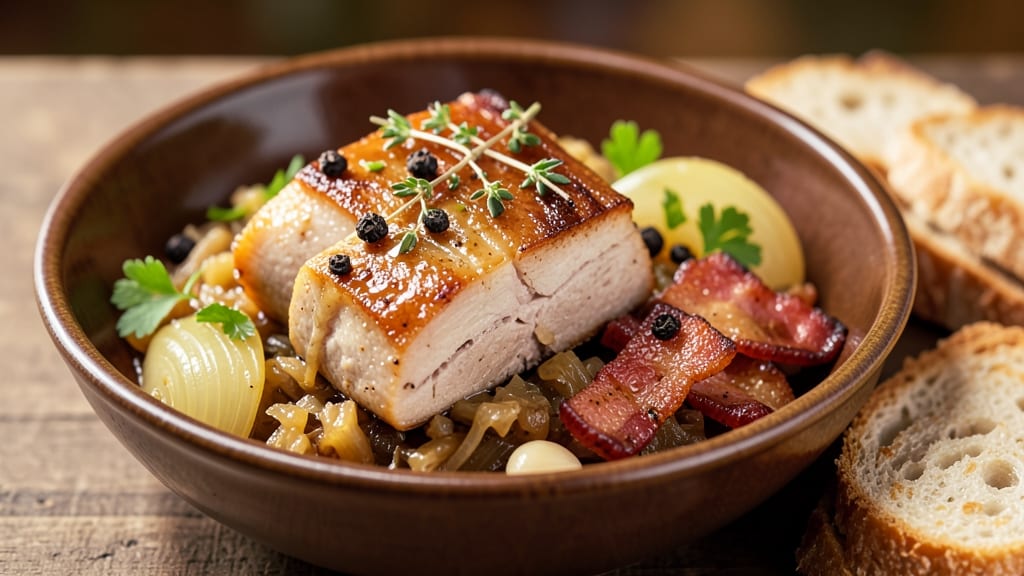
This New Year’s pork and sauerkraut recipe brings tradition to your table with crispy bacon bites and tangy fermented cabbage that balance perfectly. Growing up in small-town Georgia, I learned how pork and sauerkraut symbolize prosperity in Southern New Year’s celebrations—every bite feels like good luck.
The secret lies in slow-cooking the pork until tender while sautéing the sauerkraut until it’s caramelized and bright.
What makes this dish special is the contrast: crispy edges on the pork meet the sharp tang of sauerkraut, creating a harmony of textures and flavors that’s both comforting and celebratory. I’ve perfected this method over years of holiday cooking, ensuring the pork stays juicy while the sauerkraut develops depth.
The result is a hearty, festive meal that’s easy to prepare but feels like a restaurant-quality feast.
By the time you serve this dish, your kitchen will smell like a Southern holiday gathering, and your guests will rave about the perfect balance of crispy, tender, and tangy.
The pork’s rich flavor pairs beautifully with the sauerkraut’s acidity, making every bite unforgettable. This is the kind of recipe that turns a simple dinner into a celebration.
Serve it with crusty bread to soak up the juices or alongside roasted potatoes for a complete New Year’s spread. Here’s how to make it shine for your gathering.
Ingredients for new year's pork and sauerkraut
Pork shoulder, crispy bacon, and tangy sauerkraut—this Southern New Year’s dish is all about bold flavors and good luck.
| Ingredient | Amount | Notes |
|---|---|---|
| Pork Shoulder 🥓 | 2 lb | Bone-in for flavor, cut into 1.5-inch cubes |
| Bacon 🥓 | 8 oz | Thick-cut, cut into 1-inch pieces |
| Sauerkraut 🥬 | 2 cups | Drained, rinsed if too sour |
| Yellow Onion 🧅 | 1 whole | Sliced into 1/4-inch rounds |
| Garlic Cloves 🧄 | 4 cloves | Minced for depth of flavor |
| Apple Cider Vinegar 🍏 | ¼ cup | For tangy brightness |
| Brown Sugar 🍚 | 2 tbsp | Light or dark preferred |
| Dijon Mustard 🍯 | 1 tbsp | For subtle tang |
| Fresh Thyme 🌿 | 1 tbsp | Chopped, or 1 tsp dried |
| Black Peppercorns 🌶️ | ½ tsp | Freshly cracked for heat |
| Salt 🧂 | 1 ½ tsp | Kosher or sea salt |
| Olive Oil 🫒 | 2 tbsp | For crispy bacon and pork |
| Crusty Bread 🍞 | 4 slices | For serving, like sourdough |
| Fresh Parsley 🌿 | ¼ cup | Chopped, for garnish |
The pork shoulder is the heart of this dish—bone-in, cut into even cubes—so don’t skip that. I grab mine from Costco when I’m feeding a crowd, but any grocery store carries it. Look for good marbling; that’s what keeps it juicy. The bacon? Thick-cut is non-negotiable—it renders fat beautifully and stays crispy. For sauerkraut, Rehr’s or local brands taste best; avoid the pre-sweetened kind. If yours is too sour, rinse it well before using. Fresh thyme and parsley? Trader Joe’s has great bundles, but any grocery store’s herb section works.
No thick-cut bacon? Regular bacon cut into smaller pieces works, but it’ll render faster. Sauerkraut too sour? Add a pinch of sugar or swap in some cooked cabbage. Out of fresh thyme? Dried thyme at half the amount gets you close. The apple cider vinegar adds that signature tang—substitute lemon juice if you’re out, but it’ll taste slightly different. For the pork, pork butt or pork shoulder both work, but avoid tender cuts like loin—they’ll turn dry. The bread? Any crusty loaf does the trick—sourdough, baguette, whatever you’ve got.
The pork keeps 3-4 days in the fridge if stored in its juices, but it’s even better reheated the next day. Bacon fat solidifies, so reheat gently in a skillet to restore crispiness. Sauerkraut reheats well too—just warm it through in a pan with a splash of water. For leftovers, portion into containers with bread on the side. Freezes beautifully for up to 3 months, making it perfect for meal prep. The crispy bacon bits? Save those—they’re magical on salads or sandwiches.
Why You'll Love This Recipe
- One-Pan Magic: I swear by this recipe when I’m too tired to scrub a million dishes. Toss the pork shoulder and bacon on a sheet pan, let the oven do the work—no pots, no pans, just done. The onions caramelize right alongside the meat, and honestly? That’s where the real flavor happens.
- Crispy-Creamy Magic: The bacon renders into crispy bits while the pork stays juicy, and that sauerkraut? Tangy, funky, and just salty enough to make your taste buds dance. Between us, the garlic cloves get toasted until they’re golden—that’s the secret. Every bite is a perfect balance of smoky, crispy, and tangy.
- Leftovers That Don’t Suck: This dish actually gets better the next day. Cold slices of pork with that sauerkraut? It’s like a hearty, tangy sandwich waiting to happen. I’ll be real: I’ve packed it for lunch three times this week, and no one’s complained (yet).
- Budget-Friendly Feast: Pork shoulder and bacon stretch across meals without breaking the bank. A single shoulder feeds my family for days, and the sauerkraut adds that restaurant-worthy tang for pennies. Plus, it’s one of those dishes where you can eyeball the ingredients—no fancy measuring, just good food.
Step-by-step instructions for New Year's pork and sauerkraut
Here's how to create a perfect balance of crispy pork and tangy fermented flavors for your celebration.
Prepare the Pork and Bacon
Cut the 2 lb pork shoulder into 1.5-inch cubes using a sharp chef's knife. Place them in a large bowl and set aside. Cut the 8 oz thick-cut bacon into 1-inch pieces and place in a cold skillet over medium-low heat. Cook the bacon slowly for 8-10 minutes, stirring occasionally, until it becomes deep golden brown and crispy. Remove the bacon with a slotted spoon and drain on paper towels, reserving 2 tablespoons of the bacon fat in the skillet.
Here's the thing—don't rush the bacon. Cooking it too quickly will make it rubbery instead of crispy. You want those edges to be crisp enough to shatter when you bite into it. Once done, transfer the crispy bacon to a plate and set aside.
Sear the Pork and Build the Sauce
Add 2 tablespoons olive oil to the skillet with the reserved bacon fat and heat over medium-high heat. Working in batches if needed, add the pork cubes and sear for 3-4 minutes per side until they develop a deep golden-brown crust. Remove the pork and set it aside with the bacon.
In the same skillet, add the sliced 1 whole yellow onion and cook for 5-6 minutes until softened and lightly caramelized. Stir in the 4 minced garlic cloves and cook for 30 seconds until fragrant. Pour in the 0.25 cup apple cider vinegar and scrape up any browned bits from the bottom of the pan. Let it simmer for 2 minutes until slightly reduced.
Combine and Simmer
Return the pork to the skillet and add the 2 cups sauerkraut, 2 tablespoons brown sugar, 1 tablespoon Dijon mustard, 1 tablespoon chopped fresh thyme, 0.5 teaspoon cracked black peppercorns, and 1.5 teaspoons salt. Stir everything together until the sauerkraut is well-coated. Pour in ½ cup water and bring to a simmer over medium heat. Cover and let it cook for 45-50 minutes, stirring occasionally, until the pork is fork-tender and the sauce has thickened.
Real talk: If the sauce looks too thin, uncover it and let it reduce for a few more minutes. You want it to cling to the pork and coat the bread nicely. The pork should pull apart easily with a fork, but still hold its shape.
Serve with Crusty Bread
Transfer the pork and sauerkraut mixture to a serving platter. Garnish with the reserved crispy bacon pieces and 0.25 cup chopped fresh parsley. Serve immediately with 4 slices crusty bread on the side for soaking up the delicious sauce.
This dish is perfect for sharing—each bite delivers a perfect balance of crispy pork, tangy sauerkraut, and sweet-savory sauce. The contrast of textures and flavors makes it a standout for any celebration.
Pro Tips For Making New Year'S Pork And Sauerkraut
- CRISP THE BACON FIRST: I used to toss the bacon straight into the pan with everything else, and it just got soggy—no matter how long I cooked it. Instead, fry the bacon until it’s deep golden, then pull it out and set it aside. That rendered fat is liquid gold for searing the pork shoulder later, and the crispy bacon adds the right salty crunch at the end.
- DRAIN AND RINSE THE SAUERKRAUT: Skip this step, and your dish will taste like a science experiment gone wrong. Sauerkraut is briny—sometimes dangerously so. Drain it in a colander, then rinse it under cold water until the liquid runs clear. Pat it dry with a towel before adding it to the pan. Trust me, your taste buds will notice the difference.
- SEAR THE PORK IN BATCHES: If you try to brown a whole pork shoulder at once, you’ll end up with uneven cooking and a pan full of steam. Cut the pork into 1.5-inch chunks first, then sear them in batches over medium-high heat. This guarantees a deep, caramelized crust on every piece without crowding the pan.
- ADD GARLIC AT THE RIGHT TIME: Tossing garlic in with the onions at the start? You’ll burn it before the pork is even halfway done. Instead, add the minced garlic after the onions have softened—about 5 minutes before the pork finishes. This keeps it fragrant and nutty, not bitter or charred. (Yes, even if you’re impatient like me.)
Flavor customization for this recipe
Sweet Heat Twist
Add 1 teaspoon smoked paprika and ½ teaspoon cayenne pepper to the pork while searing for a subtle smoky kick. For sweetness, toss in 2 tablespoons apple cider along with the sauerkraut. This balances the tang with a caramelized depth—just like my farm-raised pigs get when slow-smoked over hickory. 🔥
Herb-Infused Variation
Swap the thyme for 1 tablespoon fresh rosemary and 1 tablespoon fresh sage (chopped) when combining with the sauerkraut. These herbs add an earthy aroma that pairs beautifully with the pork’s richness.
I often use these when cooking for Christmas, but they work just as well for New Year’s. The rosemary’s piney notes cut through the sauerkraut’s sharpness perfectly.
Apple-Cider Glaze
For a glossy finish, reduce ½ cup apple cider vinegar with 1 tablespoon brown sugar until syrupy (about 5 minutes on medium-high heat). Drizzle this glaze over the pork and sauerkraut just before serving.
The glossy sheen makes the dish look festive, and the extra tang elevates every bite. I learned this trick from my time in Charleston—it’s a game-changer for holiday meals.
Spicy Mustard Kick
Boost the Dijon mustard to 2 tablespoons and add ½ teaspoon hot sauce (like Crystal or Tabasco) when combining with the sauerkraut. This adds a fiery contrast that’s especially popular in Georgia’s BBQ circles.
The heat balances the richness of the pork beautifully, making each bite exciting. Serve with extra crusty bread to cool the palate.
Caramelized Onion Boost
Cook the onions for an extra 10 minutes until deep brown and jammy before adding garlic. This adds a sweet, almost jam-like depth that pairs wonderfully with the tangy sauerkraut.
I often do this when I’m feeling fancy—it’s worth the extra time for a restaurant-quality dish. The caramelized onions make the pork and sauerkraut feel luxurious. 💫
Cheesy Finish
Stir in ½ cup shredded sharp cheddar or Gruyère during the final 5 minutes of simmering. The cheese melts into the sauce, creating a creamy, tangy-sweet contrast.
This is a Southern favorite—especially in my hometown of Atlanta—where cheesy pork dishes are a holiday staple. Garnish with extra cheese before serving for a decadent touch.
Nutrition facts
Frequently asked questions
Why is sauerkraut traditionally served with pork during New Year's?
In Southern traditions, sauerkraut symbolizes prosperity and good luck—its fermented tang represents abundance. Pork, especially shoulder, was historically preserved through smoking and salting, making it a winter staple. Together, they create a perfect balance of textures and flavors that celebrate both abundance and comfort. This pairing dates back to German and Eastern European immigrants who brought the tradition to America.
Can I make this recipe in a slow cooker for hands-off cooking?
Brown the bacon and pork first, then transfer everything to your slow cooker. Add all other ingredients and cook on low for 6-7 hours or high for 3-4 hours until the pork is tender. The slow cooker keeps the pork juicy while letting the flavors meld beautifully. Just stir occasionally and add a splash of water if needed to prevent drying out.
What's the best way to reheat leftovers without drying out the pork?
Reheat gently in a skillet with a splash of water or broth over low heat for 5-7 minutes, stirring occasionally. Alternatively, cover with a damp paper towel and warm in the microwave for 1-2 minutes. The key is moisture—never reheat dry. For crispy bacon bits, toast them separately in a dry pan until they regain their crunch.
How can I make this dish vegetarian-friendly?
Swap the pork for smoked tofu or mushrooms (like portobello or king oyster). Use tempeh bacon for the crispy element, and add 1 tablespoon soy sauce to the sauerkraut mixture for umami depth. The texture contrast will still shine—just reduce cooking time by 15-20 minutes since plant-based proteins cook faster.
What sides pair best with this New Year's dish?
Crusty bread is a must for soaking up the sauce, but you could also serve with roasted potatoes, buttery egg noodles, or a fresh green salad to cut through the richness. For a complete Southern spread, add cornbread and collard greens. The key is balancing textures—something light to complement the hearty pork and sauerkraut.