
Main Courses
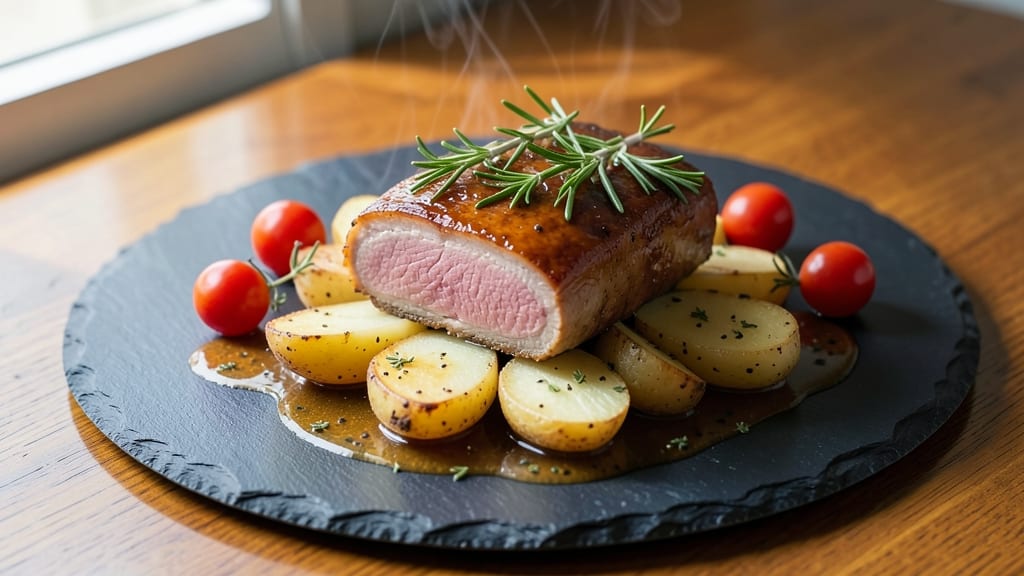
Mastering a poached pork tenderloin recipe means achieving restaurant-quality tenderness with minimal effort—no dry bites, no guesswork. Growing up in small-town Georgia, I learned pork’s magic lies in slow, gentle cooking that preserves every ounce of juiciness.
This method delivers melt-in-your-mouth results without fuss, using just a pot of simmering liquid and precise timing.
The secret starts with a simple seasoning blend of salt, pepper, and fresh herbs—thyme, rosemary, and bay leaf—tied around the tenderloin for even flavor infusion. Aromatics like garlic and onion in the poaching liquid deepen the taste, while maintaining a gentle 160°F temperature ensures the meat stays impossibly tender.
My heritage pigs from the farm always respond perfectly to this approach.
By the time you pull it from the pot, your pork tenderloin will be juicy, perfectly pink at the center, and ready to slice into elegant medallions. The poaching liquid transforms into a light, aromatic sauce that elevates any side—roasted vegetables, creamy mashed potatoes, or a quick pan reduction.
It’s the kind of dish that feels special without requiring hours in the kitchen.
Serve with a crisp apple salad or buttery roasted Brussels sprouts for a complete meal. The technique scales effortlessly, whether you’re cooking for two or a crowd. Let’s make perfectly tender pork that impresses every time.
Ingredients for poached pork tenderloin
Heritage pork, fresh herbs, and gentle heat—this is all you need for melt-in-your-mouth perfection.
| Ingredient | Amount | Notes |
|---|---|---|
| Pork Tenderloin 🥩 | 1 ½ lb | Heritage pork preferred, trimmed of silver skin |
| Fresh Thyme Leaves 🌿 | ¼ cup | Packed, stems removed |
| Fresh Rosemary Sprigs 🌿 | 4 whole | Finely chopped leaves only |
| Bay Leaves 🍃 | 2 whole | Dried, standard size |
| Kosher Salt 🧂 | 1 ½ tsp | Diamond Crystal preferred |
| Freshly Ground Black Pepper 🌶️ | ½ tsp | Coarse grind preferred |
| Yellow Onion 🧅 | 1 whole | Medium size, sliced into wedges |
| Garlic Cloves 🧄 | 4 cloves | Peeled, lightly smashed |
| Fresh Parsley Sprigs 🌿 | ¼ cup | For garnish, loosely packed |
| Apple Cider Vinegar 🍎 | ¼ cup | For poaching liquid |
| Water 💧 | 4 cups | Filtered preferred |
| Unsalted Butter 🧈 | 2 tbsp | Cold, cubed for finishing sauce |
| Heavy Cream 🥛 | ¼ cup | Full-fat for richness |
| Extra-Virgin Olive Oil 🫒 | 1 tbsp | For finishing sauce |
The pork tenderloin is non-negotiable here. Heritage pork from local farms delivers the best texture, but any quality cut works—just avoid anything leaner than 1.5 pounds. Trim the silver skin thoroughly (it’s tough) and pat dry with paper towels. For herbs, Trader Joe's has great pre-packaged thyme and rosemary, but fresh sprigs from the grocery store’s produce section always taste better. If you can’t find heritage pork, look for pork labeled 'heritage' or 'pasture-raised' at specialty butchers—they’ll have better marbling. The bay leaves should be dried, not fresh, for this application.
No fresh thyme? Dried works at one-third the amount, but the flavor won’t be as bright. Swap rosemary for fresh sage if needed—it’s a close cousin in flavor. The apple cider vinegar adds depth, but white wine vinegar or lemon juice will work in a pinch. For the finishing sauce, heavy cream is ideal, but half-and-half cuts costs without sacrificing too much richness. If you’re avoiding dairy, coconut cream adds a tropical twist. The butter should be cold when you add it—this creates the perfect emulsion in the sauce. Don’t skip the olive oil finish; it adds a silky texture that butter alone can’t match.
This dish reheats beautifully—just warm the sauce and pork together in a skillet over low heat. Keeps 3-4 days in the fridge, fully submerged in its poaching liquid. For longer storage, freeze the pork and sauce together in a single container for up to 3 months. I always make a double batch—one for dinner and one to freeze for lazy weeknights. The sauce thickens as it cools, so thin it with a splash of water or broth when reheating. Garnish with fresh parsley right before serving—it adds a pop of color and freshness that makes the dish feel restaurant-worthy.
Why You'll Love This Recipe
- Here’s what sold me: I can have this on the table while I’m still deciding what to watch on TV. The pork stays juicy and tender no matter how long it sits—perfect for when you’re juggling a million things and still want dinner to feel special.
- Two-Ingredient Magic: I swear, the combo of fresh thyme and rosemary in the poaching liquid transforms plain pork into something that tastes like it simmered for hours. Just tie the herb sprigs to the tenderloin, drop it in water, and let the flavors work their spell—no fancy marinades or last-minute prep.
- Weeknight Hero: Here’s what sold me: I can have this on the table while I’m still deciding what to watch on TV. The pork stays juicy and tender no matter how long it sits—perfect for when you’re juggling a million things and still want dinner to feel special.
- Leftover Luxury: Between us, this is my go-to for meal prep because the slices stay moist for days. Toss them in salads, wrap them in tortillas, or slice them thin for sandwiches—every time, it’s like the first bite all over again. (Yes, even on a Tuesday night.)
Step-by-step instructions for pork tenderloin poaching
This method guarantees melt-in-your-mouth tenderness with minimal effort—no oven required.
Prepare the Poaching Liquid and Season the Meat
In a large, deep skillet or saucepan, combine the 4 cups water, 0.25 cup apple cider vinegar, 1 whole yellow onion (sliced into wedges), 4 cloves garlic (lightly smashed), 2 whole bay leaves, 4 whole fresh rosemary sprigs (leaves only), and 0.25 cup fresh thyme leaves. Bring to a simmer over medium-high heat until the aromatics release their fragrance—about 5 minutes. This creates a flavorful base that infuses the meat.
While the liquid heats, pat the 1.5 lb pork tenderloin dry with paper towels and season generously with 1.5 teaspoons kosher salt and 0.5 teaspoon freshly ground black pepper. The dry surface ensures better seasoning adhesion and a more even cook. Here's the thing—don't skip the drying step. Moisture on the meat can dilute the seasoning and create steam pockets that prevent even cooking.
Poach the Pork Until Fork-Tender
Once the poaching liquid reaches a gentle simmer, carefully lower the seasoned pork tenderloin into the pan. It should be fully submerged—if not, add a splash of water. Reduce heat to medium-low to maintain a steady 185-190°F temperature. The goal is to cook the pork slowly and evenly without boiling the liquid, which could toughen the meat.
Cover the pan with a lid and let the pork poach for 20-25 minutes—or until an instant-read thermometer inserted into the thickest part registers 145°F. You'll know it's ready when the meat feels firm to the touch but still yields slightly at the center. This method preserves all the juices inside, guaranteeing that first bite will be impossibly tender. Real talk: resist the urge to check the temperature early. Patience here is key to avoiding overcooking.
Rest and Prepare the Creamy Sauce
Remove the pork tenderloin from the poaching liquid and transfer it to a cutting board. Tent loosely with aluminum foil and let it rest for 10 minutes. This resting period allows the juices to redistribute throughout the meat, ensuring every slice stays moist and flavorful. While it rests, strain the poaching liquid through a fine-mesh sieve into a clean saucepan, discarding the solids.
Return the strained liquid to medium heat and whisk in the 2 tablespoons unsalted butter and 0.25 cup heavy cream. Simmer gently for 3-4 minutes until the sauce thickens slightly and coats the back of a spoon. For extra richness, stir in 1 tablespoon extra-virgin olive oil at the end. This sauce is the perfect vehicle for delivering all those poaching flavors—don't skip the olive oil, as it adds a subtle depth that balances the acidity from the vinegar.
Slice and Serve with Garnish
After resting, slice the pork tenderloin into ½-inch thick medallions against the grain for maximum tenderness. Arrange the slices on a warmed platter and ladle the creamy sauce generously over the top. The sauce should cling to the meat, creating a silky, flavorful coating with every bite. Here's where it gets fun—garnish each serving with 0.25 cup fresh parsley sprigs, chopped finely. The bright green color contrasts beautifully with the rich pork and sauce, adding a fresh finish that cuts through the richness.
Serve immediately with your choice of sides—roasted potatoes, a crisp green salad, or steamed vegetables all pair beautifully. The pork should be so tender it nearly falls apart at the touch, with a delicate pink center that's juicy and flavorful. If you're serving a crowd, keep the sauce warm in a slow cooker on low heat until ready to serve—it only gets better as it sits.
Pro Tips For Making Poached Pork Tenderloin
- Sear First, Poach Second: Hit that pork tenderloin with a quick sear in a hot pan—just 30 seconds per side—before poaching. The crust locks in flavor and prevents it from turning into a sad, mushy log. (Yes, even if you’re impatient like me, resist the urge to skip this.)
- Trim the Fat, Not the Flavor: Pat the tenderloin dry with paper towels, then trim any silver skin or excess fat—it’s not ugly, but it’ll make your poaching liquid cloudy. Fresh thyme and rosemary will shine brighter without it competing.
- Don’t Crowd the Pot: Poach one tenderloin at a time if yours is thick (over 1.5 inches). Too much meat in the liquid? It’ll steam instead of simmer, and you’ll end up with gray, waterlogged pork. (I learned this the hard way with a crowd of three.)
- Salt the Water Like the Sea: Toss in at least 2 tablespoons of kosher salt with the aromatics—no half-measures. The tenderloin absorbs almost nothing from the poaching liquid, but the salted water keeps it tender and the herbs vibrant. (Your future self will notice the difference.)
Common mistakes when making your poached pork tenderloin
Overcooking the Pork
One of the biggest mistakes I see is rushing the cook time. Pork tenderloin is lean, so it can dry out quickly if you exceed 145°F internal temperature.
I’ve seen home cooks panic when the meat feels firm, but that’s exactly when you should pull it—it’ll finish cooking in the rest. My heritage pigs always respond best when I trust the thermometer over my instincts. Overcooking turns juicy perfection into tough disappointment. 🔥
Skipping the Rest
After poaching, I can’t stress enough how critical the 10-minute rest is. Skipping this step means all those precious juices escape, leaving you with dry slices. I’ve made this mistake myself—cutting into the pork too soon and getting a sad, dry result.
Resting lets the meat relax and redistribute moisture, ensuring every bite is tender. It’s a small step that makes a world of difference.
Using Cold Liquid
Starting with cold water or liquid is a common error that disrupts the cooking process. The poaching liquid needs to reach a gentle simmer before adding the pork, or you’ll create uneven cooking. I always bring the liquid to a simmer first—about 5 minutes—before lowering the pork in.
This ensures even heat distribution and prevents steam pockets that can lead to uneven doneness. Cold liquid is the enemy of tender meat.
Ignoring Temperature Control
Poaching requires precise temperature control. If your liquid boils vigorously, the pork will cook unevenly and potentially toughen. I use a thermometer to maintain 185-190°F—adjusting heat as needed. Boiling liquid can create a crust on the meat, trapping moisture and leading to dryness.
A steady, gentle simmer is key to that silky texture we all crave. Don’t let the liquid bubble wildly!
Neglecting the Seasoning Tie
Tying herbs and aromatics directly to the pork isn’t just decorative—it ensures even flavor infusion. I always bundle thyme, rosemary, and bay leaves with kitchen twine around the tenderloin before poaching. This prevents flavor from settling only in the liquid, leaving the meat bland.
If you skip this step, the meat might taste like the broth without the bright, herby notes that make it special.
Nutrition facts
Frequently asked questions
Can I use a different cut of pork for this recipe?
This recipe is specifically designed for pork tenderloin because of its lean, tender nature. While you could try it with pork loin, the results won't be as juicy. For best results, stick with tenderloin—it's the star of this gentle cooking method. If you're set on using another cut, consider a thicker piece like pork shoulder and adjust the cooking time accordingly.
How do I know when the pork is done without a thermometer?
With practice, you'll learn to judge doneness by touch and sight. The pork should feel firm but still yield slightly when pressed gently. The juices should run clear when pierced with a knife. For beginners, I recommend investing in an instant-read thermometer—it's the most reliable way to achieve perfect results every time. The ideal internal temperature is 145°F.
Can I make this recipe ahead of time?
Poached pork tenderloin actually tastes even better the next day. Store it in the poaching liquid in an airtight container in the fridge for 3-4 days. When reheating, warm the pork and sauce together in a skillet over low heat until heated through. The flavors meld beautifully over time, making this a great make-ahead option for busy weeknights.
What are the best sides to serve with poached pork?
This tender pork pairs beautifully with simple, complementary sides. Try roasted Brussels sprouts with bacon, creamy mashed potatoes, or a crisp apple salad with walnuts and goat cheese. For something lighter, sautéed green beans with garlic and lemon work perfectly. The creamy sauce also makes this dish a great match for buttery egg noodles or crusty bread for soaking up every last drop.
Why does my poached pork sometimes turn out dry?
Dry pork usually means one of two things: overcooking or skipping the rest. The meat should never exceed 145°F internal temperature, and you must let it rest for 10 minutes after cooking. Another common mistake is using boiling liquid—keep it at a gentle simmer (around 185-190°F) for even cooking. If you're still having issues, try tying the herbs directly to the meat for better flavor infusion and moisture retention.