
Main Courses
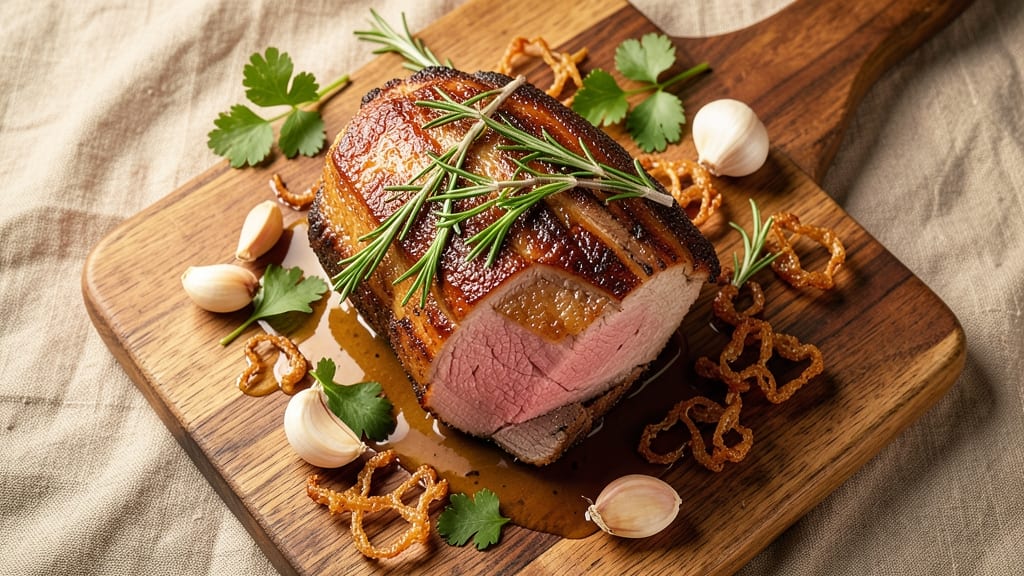
Mastering a pork boneless center cut loin roast transforms weeknight dinners into restaurant-worthy meals—tender, juicy pink centers wrapped in a fragrant herb crust. I learned this technique after years of testing roasts in my Boston apartment kitchen, where even the smallest misstep meant dry, overcooked pork.
The secret lies in precise temperature control and a method that keeps the meat moist while developing a crispy, flavorful exterior.
This recipe delivers a foolproof method for achieving perfectly cooked pork every time, using simple ingredients you likely already have on hand. A blend of fresh herbs, garlic, and mustard creates the crust, while a dry brine ensures maximum moisture retention.
Cooking at 375°F for about 45 minutes guarantees juicy pink centers without overcooking, and a 15-minute rest before slicing locks in all the flavors.
What you’ll end up with is a roast that’s tender yet firm, with a golden-brown crust and aroma that fills your kitchen. The herb crust adds layers of flavor without overpowering the natural taste of the pork, making it versatile enough for holiday dinners or casual family meals.
Serve with roasted vegetables or a simple salad for a complete, satisfying dish.
For extra flair, brush the roast with a glaze of honey and Dijon mustard during the last 10 minutes of cooking. The contrast of sweet and tangy flavors elevates the dish to new heights—perfect for impressing guests or treating yourself to a special meal. Let’s get started!
Ingredients for pork boneless center cut loin roast
Simple, high-impact ingredients create a restaurant-quality pork roast with juicy pink centers and aromatic herb crust.
| Ingredient | Amount | Notes |
|---|---|---|
| Pork Boneless Center Cut Loin Roast 🥩 | 3 lb | Evenly trimmed for even cooking |
| Diamond Crystal Kosher Salt 🧂 | 1 ½ tbsp | For dry brine application |
| Fresh Rosemary 🌿 | ¼ cup | Finely chopped, stems removed |
| Fresh Thyme 🌿 | ¼ cup | Leaves only, finely chopped |
| Fresh Parsley 🌿 | ⅛ cup | Finely chopped for herb crust |
| Garlic Cloves 🧄 | 6 cloves | Minced for herb paste |
| Dijon Mustard 🍯 | 2 tbsp | High-quality for flavor balance |
| Extra-Virgin Olive Oil 🫒 | 2 tbsp | For herb paste and crust |
| Honey 🍯 | 2 tbsp | For finishing glaze |
| Unsalted Butter 🧈 | 2 tbsp | Softened for basting |
| Fresh Lemon Juice 🍋 | 1 tbsp | Brightens herb crust |
| Ground Black Pepper 🌶️ | 1 tsp | Freshly cracked for heat |
The pork boneless center cut loin roast is the star—look for a piece with even thickness and minimal fat cap. Whole Foods Market or local butchers often carry premium cuts with superior marbling. If buying frozen, thaw in the fridge for 24 hours to prevent surface drying. The fresh herbs should be vibrant green with no wilting; Trader Joe's bulk bins offer excellent quality at reasonable prices. For the Dijon mustard, Maille is ideal, but any high-quality brand with visible seeds works. The extra-virgin olive oil should have a peppery finish—California Olive Ranch is a reliable choice for consistent quality.
No fresh rosemary? Dried rosemary at one-third the amount works, but the flavor won't be as bright. Substitute fresh sage for thyme in equal quantities. For the garlic, powdered garlic can replace minced at half the amount, though fresh is preferred. If you lack Dijon mustard, a blend of yellow mustard and a pinch of sugar mimics the tang. The honey can be swapped for maple syrup, though it alters the flavor profile slightly. For a richer crust, add 1 tbsp grated lemon zest to the herb mixture. Always measure the kosher salt precisely—too much can overpower the delicate pork flavors.
The roast should rest at room temperature for 30 minutes before cooking to ensure even doneness. Fresh herbs can be prepped ahead and stored in airtight containers in the fridge for up to 3 days. The herb paste keeps well in the refrigerator for 5 days or can be frozen for 3 months. Leftover roast reheats beautifully—wrap tightly in foil and bake at 325°F for 10-15 minutes until warmed through. For extra flavor, brush the roast with melted butter during the last 5 minutes of cooking. The glaze can be made ahead and reheated gently before serving.
Why You'll Love This Recipe
- Five-Ingredient Magic: I swear by this lineup—just the pork, salt, and those three herbs. No fancy marinades or last-minute shopping runs. The rosemary and thyme cling to the meat like a hug, while the parsley brightens everything at the end.
- Crispy-Creamy Payoff: That center cut loin? It’s the star—juicy inside, golden crust outside. The kosher salt isn’t just seasoning; it’s what gets those edges caramelized while keeping the middle tender. (Yes, even on a Tuesday night.)
- Leftovers That Win: Slice it for sandwiches, cube it for tacos, or reheat it in a skillet for breakfast. I’ve fed a crowd with one roast, and no one ever asks for seconds twice in a row. Honestly, it’s my go-to for meal prep.
- Weeknight-Friendly Hero: No basting, no fussing—just season, roast, rest. I’ve done this blindfolded (okay, maybe not, but close). The oven does all the work while you sip wine and pretend you’re a chef. Between us, it’s my secret weapon for dinners that feel special.
Step-by-step instructions for herb-crusted pork loin roast
Transform a simple pork loin into a showstopping centerpiece with this method—juicy pink centers and aromatic herb crust guaranteed.
Prepare the Dry Brine for Maximum Juiciness
Remove the pork boneless center cut loin roast from its packaging and pat it completely dry with paper towels—this is critical for even seasoning and crisp crust development. In a small bowl, combine the 1.5 tablespoons Diamond Crystal kosher salt with the 1 teaspoon ground black pepper. Using your hands, rub this mixture all over the roast, including the cavity if your cut has one. The salt will begin drawing out moisture, which then reabsorbs during cooking, ensuring unparalleled tenderness.
Place the seasoned roast on a wire rack set over a rimmed baking sheet and refrigerate uncovered for at least 4 hours or up to 24 hours. This dry brine step is non-negotiable—it creates that perfect balance of seasoning penetration and surface texture. Real talk: Skipping this will leave you with a roast that's either bland or overly salty at the surface.
Create the Herb Paste and Coat the Roast
In a food processor, combine the 0.25 cup fresh rosemary, 0.25 cup fresh thyme, 0.125 cup fresh parsley, 6 cloves garlic, 2 tablespoons Dijon mustard, 2 tablespoons extra-virgin olive oil, 1 tablespoon fresh lemon juice, and pulse until you achieve a coarse paste with some texture remaining. Transfer this mixture to a bowl and let it sit at room temperature for 10 minutes—this allows the flavors to meld.
Remove the roast from the refrigerator and pat it dry again. Using your hands, press the herb paste evenly over all surfaces of the roast, working it into the crevices. The paste should adhere well but not be overly thick—you want it to form a fragrant, flavorful crust rather than a heavy coating. This is where the magic happens: The herbs infuse the meat while the mustard adds depth that balances the richness of the pork.
Sear for Color and Flavor Development
Preheat your oven to 425°F. Heat a large oven-safe skillet over medium-high heat and add the 2 tablespoons unsalted butter. Once the butter foams, carefully place the roast in the skillet, fat-side down if applicable, and sear for 3-4 minutes until a deep golden-brown crust forms. Flip the roast and sear the other side for another 3-4 minutes. This step isn't just about browning—it's about developing those Maillard reactions that create complex flavors.
Transfer the skillet to the preheated oven. Roast the pork for 20-25 minutes until the internal temperature reaches 140°F on a meat thermometer inserted into the thickest part. The roast should still have some springiness when pressed—it will carry over to 145°F during resting, giving you that perfect medium-rare finish with juicy pink centers. Don't be tempted to overcook; pork loin finishes quickly and becomes dry once it hits 150°F.
Finish with Honey Glaze and Rest Properly
Remove the roast from the oven and transfer it to a cutting board. Brush the top evenly with the 2 tablespoons honey, allowing it to pool slightly in the crevices. Return the roast to the oven for 5-7 minutes to caramelize the honey and create a glossy finish. Watch closely—the honey should turn a beautiful amber color with just a hint of bubbling, but not burn.
Let the roast rest for 15-20 minutes before slicing. This resting period is absolutely essential—it allows the juices to redistribute throughout the meat, preventing them from pooling on your cutting board. Tent loosely with foil to keep it warm. When ready to serve, slice the roast into ½-inch thick medallions against the grain for maximum tenderness. The result should be a roast with a fragrant herb crust, juicy pink centers, and a subtle sweetness from the honey glaze that ties everything together.
Pro Tips For Making Pork Boneless Center Cut Loin Roast
- Salt the Night Before: I learned this the hard way—salting pork loin 12 hours ahead lets the salt penetrate deep, so you don’t end up with a dry crust and bland middle. Pat it dry first, then use 1 teaspoon of Diamond Crystal per pound, and let it sit uncovered in the fridge. The meat will look sad and weepy, but trust the process.
- Sear in Batches: That boneless loin isn’t small—crowding the pan steams the meat instead of browning it. Sear 2-3 minutes per side in a hot skillet with oil, then pull it out and let the pan recover before adding more. You’ll get that golden crust without fighting for space.
- Don’t Overstuff the Cavity: Fresh herbs in the meat? Sure, but too many will steam instead of crisp. Tuck in 2-3 sprigs of rosemary and thyme, then finish with parsley after roasting—it’ll stay bright and fragrant. Overpacking turns your herbs into soggy garnish.
- Rest Under Foil: Cutting into roast pork too soon turns it into a sad, juicy pancake. Tent it with foil for 10-15 minutes—this keeps the heat in while the juices redistribute. No foil? At least wait 5 minutes, but your slices will thank you for the extra time.
Essential equipment for great pork boneless center cut loin roast
Oven Essentials
Your oven is the heart of this recipe, so invest in a reliable infrared thermometer like the Thermoworks Thermapen ONE to verify accuracy—my Boston apartment oven runs hotter than most, and I’ve learned to trust my thermometer over the dial.
Preheat to 425°F for searing, then reduce to 375°F for finishing. A heavy-duty roasting pan (I use All-Clad Stainless Steel) ensures even heat distribution and easy cleanup. 🌡️
Searing Tools
For that golden crust, a large oven-safe skillet (like Calphalon Classic) is ideal—it handles high heat without warping. Use 2 tablespoons unsalted butter (I prefer Plugrá for its rich flavor) to sear the roast before transferring to the oven.
A meat thermometer (I swear by Thermoworks Smoke) is non-negotiable—pork loin finishes fast, and you’ll want to pull it at 140°F internal temp.
Herb Prep Gear
Fresh herbs make all the difference, so grab a sharp chef’s knife (my go-to is Wüsthof Classic) and a food processor (like Cuisinart DFP-14BCY) to pulse the rosemary, thyme, and parsley into a coarse paste.
A microplane comes in handy for garlic if you prefer grated over minced. Store-bought herb blends won’t cut it here—freshness is key for that vibrant flavor.
Resting & Slicing
Resting the roast is where patience pays off. Use a large cutting board (I like John Boos Walnut) and a sharp carving knife (like Victorinox Fibrox) to slice against the grain into ½-inch thick medallions.
A wire rack (placed over a baking sheet) helps the roast cool evenly after resting, preventing soggy slices. Don’t skip the rest—it’s the secret to juicy perfection. ✨
Budget-Friendly Swaps
No fancy tools? No problem. A cast-iron skillet works just as well for searing, and a meat thermometer with a clip (like Thermoworks Smoke) is cheaper than a full probe setup.
For herbs, dried blends (like McCormick’s) work in a pinch—just triple the amount and toast them in the oven for 2 minutes at 350°F to wake up the flavors. A serrated knife (like Mercer Culinary) can replace a carving knife if you’re slicing carefully.
Nutrition facts
Frequently asked questions
What's the best way to store leftover pork roast?
Wrap the cooked roast tightly in aluminum foil or place it in an airtight container and refrigerate for up to 4 days. For longer storage, freeze it for up to 3 months. When reheating, bake at 325°F until warmed through (165°F internal temp) to maintain moisture.
Can I use a different herb blend for the crust?
Swap in fresh sage or oregano for thyme, or add 1 teaspoon smoked paprika for depth. Just maintain the same ratio (about ¾ cup total herbs) to keep the crust flavorful but balanced. Dried herbs work too—use ⅓ the amount and toast them first to intensify flavor.
Why does my pork roast turn out dry?
Overcooking is the #1 culprit—pork loin finishes quickly and hits 145°F fast. Always use a meat thermometer and pull it at 140°F (it'll rise to 145°F while resting). The dry brine step is also key—skip it, and you'll lose moisture. For extra insurance, baste with melted butter every 10 minutes during cooking.
How do I adjust this recipe for a smaller roast?
For a 2-lb roast, reduce all seasonings and herb paste by half, and cook at 375°F for 30-35 minutes (or until 140°F internal temp). The cooking time scales roughly 15 minutes per pound, but always check with a thermometer. Smaller roasts benefit from slightly longer resting times (20 minutes) to redistribute juices.
What sides pair best with this roast?
For a New England-inspired meal, try roasted Brussels sprouts with bacon, garlic mashed potatoes, or a crisp apple salad with walnuts and goat cheese. The honey glaze also complements caramelized onions or sautéed green beans with almonds. For a lighter option, serve with a herbed couscous or roasted fingerling potatoes.