
Main Courses
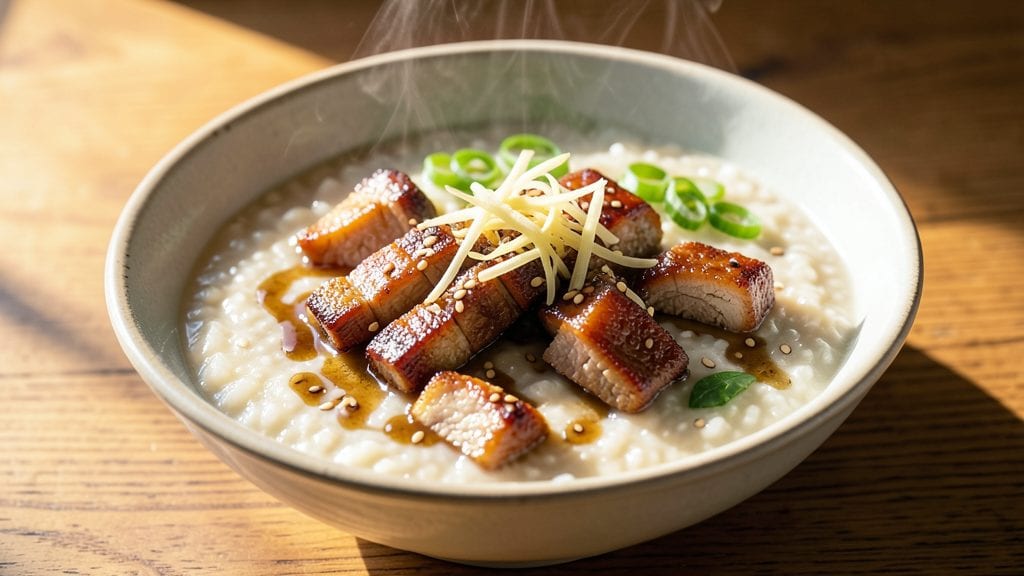
Mastering this pork congee recipe means transforming simple ingredients into a velvety porridge that balances tender pork ribs with bright ginger heat—a dish that feels like a warm embrace after a long day.
Growing up in small-town Georgia, I learned that congee wasn’t just food; it was comfort, especially when my grandmother would serve it with crispy pork skin on top.
The secret lies in slow-simmering the pork until it falls apart, then blending it into the rice until the porridge reaches that perfect silky consistency.
What sets this recipe apart is the harmony of flavors: the deep, savory richness of braised pork ribs meets the zesty kick of fresh ginger and scallions, all tied together with just a touch of soy sauce.
The process is straightforward—soak the rice overnight, simmer the pork until tender, then combine everything in one pot—but the result is restaurant-quality. Every spoonful delivers that perfect balance of textures: silky rice, tender pork, and a hint of crispness from the toppings.
By the time you finish, you’ll have a steaming bowl of congee that’s ready to be topped with fried shallots, a soft-boiled egg, or extra crispy pork skin for crunch.
It’s the kind of dish that’s equally satisfying for breakfast or dinner, and it pairs beautifully with pickled vegetables or a side of steamed greens. This is comfort food at its finest—simple yet deeply flavorful, and impossible to resist.
Whether you’re cooking for one or feeding a crowd, this recipe scales effortlessly while maintaining that perfect texture. The key is patience—letting the rice break down just right and the pork infuse the broth with its rich, meaty essence. Let’s get started on creating your own bowl of silky perfection.
Ingredients for pork congee
Pork ribs and aromatic rice transform into silky perfection—just 14 ingredients for ultimate comfort.
| Ingredient | Amount | Notes |
|---|---|---|
| Pork Ribs 🥩 | 1 ½ lb | Bone-in, cut into 1-inch pieces |
| Jasmine Rice 🍚 | 1 cup | Uncooked, long-grain preferred |
| Fresh Ginger 🧄 | 2 tbsp | Finely grated, bright pink color |
| Green Onions 🧅 | ½ cup | Sliced, white and green parts |
| Light Soy Sauce 🥄 | ½ cup | Kikkoman preferred for balance |
| Chicken Broth 💧 | 6 cups | Homemade or low-sodium store-bought |
| Sesame Oil 🫒 | 1 tbsp | Toasted, for finishing |
| White Pepper 🌶️ | ½ tsp | Freshly ground for warmth |
| Salt 🧂 | 1 tsp | Kosher or sea salt |
| Garlic Cloves 🧄 | 3 cloves | Minced, for aromatic base |
| Shallots 🧅 | 2 whole | Thinly sliced for crispy topping |
| Eggs 🥚 | 2 whole | Fresh, for soft-boiled topping |
| Vegetable Oil 🫒 | ¼ cup | For frying pork skin |
| Cilantro 🌿 | ¼ cup | Chopped, optional garnish |
The pork ribs are the heart of this dish—bone-in, meaty cuts give the most flavor. Look for thick-cut pork ribs at your local butcher or the meat department; they’ll have the best marbling. If you’re using frozen pork, thaw it overnight in the fridge—never microwave, or you’ll end up with uneven cooking. For extra richness, ask the butcher to trim the fat cap thinly so it renders beautifully during cooking. Fresh ginger is a must here—bright pink, no woody bits. If you can’t find fresh, use double the amount of powdered ginger, but it won’t have the same zing. The jasmine rice? Don’t substitute basmati or white rice—this recipe depends on its delicate floral aroma and creamy texture.
No pork ribs? Pork shoulder or pork butt works in a pinch—cut into 1-inch chunks, but expect a slightly different texture. Short on chicken broth? Pork or beef broth deepens the meaty flavor, but add a splash of soy sauce to balance. The green onions can be swapped for chives or leeks, though scallions give that classic congee brightness. For the topping, fried shallots from Trader Joe’s are a game-changer—they add instant crunch without the hassle. If you’re feeling fancy, crisp up the pork skin separately for extra indulgence. And yes, you can use dried shiitake mushrooms in the broth for umami, but fresh is better if you’ve got them.
This congee tastes even better the next day—make a double batch and store it in the fridge for up to 5 days. The rice will thicken further, so stir in a splash of broth if it gets too stiff. Freezes beautifully for 3 months—portion it into containers so you can reheat just what you need. For the toppings, keep the fried shallots and soft-boiled eggs separate until serving. Pro tip: Reheat gently over low heat with a splash of water to keep it silky, not gluey. And if you’ve got leftovers, blend them into a creamy soup the next day—trust me, it’s delicious.
Why You'll Love This Recipe
- Foolproof Simplicity: I swear by this recipe because it’s the kind of dish that forgives mistakes—simmer the pork ribs until they fall apart, then blend the rice into a creamy broth with just ginger and soy. No fancy techniques, no stress.
- Rich, Deep Umami: That first spoonful of congee, where the pork ribs melt into the broth and the ginger adds a bright kick? It’s the kind of flavor that sticks with you, especially when you top it with crisp green onions. Honestly, it’s the only way I’ll eat pork now.
- Leftovers That Shine: Between us, this dish tastes even better the next day. The broth gets richer, the pork more tender, and I’ll often reheat it for lunch—sometimes even better than the first serving. (Yes, even on a Tuesday night.)
- Budget-Friendly Feast: Pork ribs on sale? Jasmine rice in bulk? This recipe stretches every ingredient into multiple meals without breaking the bank. I’ve fed a whole family for under $15, and no one ever complains.
Step-by-step instructions for pork congee with pork ribs and ginger heat
This silky porridge comes together with patience and precision—every step builds rich flavor.
Render Pork Ribs for Deep Flavor
Heat the 0.25 cup vegetable oil in a heavy-bottomed pot over medium-high heat. Add the 1.5 lb pork ribs cut into 1-inch pieces and cook undisturbed for 5 minutes until the fat begins to render and the meat turns golden. Stir occasionally to prevent burning.
This initial searing locks in juices and develops a caramelized crust. The pork will release its fat gradually—this golden liquid is the foundation of your congee's depth. If the ribs stick, don't panic—just add 1 tablespoon chicken broth to deglaze and scrape up those flavorful browned bits from the bottom of the pot.
Build the Aromatic Base
Add the 3 cloves minced garlic cloves, 2 whole shallots sliced thin, and 2 tbsp finely grated fresh ginger to the pot. Cook for 2 minutes until the garlic turns golden and the shallots soften slightly. You'll smell that incredible aroma—this is where the magic begins.
Pour in the 6 cups chicken broth and bring to a gentle boil. Add 1 tsp salt and 0.5 tsp white pepper, then reduce heat to low. The broth should barely simmer—you're aiming for tiny bubbles at the edges, not a rolling boil. This low heat is crucial for achieving that signature silky texture.
Cook the Jasmine Rice Slowly
Add the 1 cup uncooked jasmine rice to the simmering broth. Stir gently to distribute the rice evenly. The rice will absorb the liquid over time, so don't worry if it doesn't disappear immediately. Cover the pot with a tight-fitting lid and maintain that gentle simmer for 45 minutes.
Here's the thing—congee requires constant attention. Every 10 minutes, give it a gentle stir to prevent sticking. You'll notice the rice breaking down into a creamy consistency. When the rice is fully tender and the mixture reaches a porridge-like texture (about 1 hour total), it's ready for the finishing touches.
Finish with Eggs and Toppings
Remove the pot from heat and let it sit for 5 minutes. In a separate bowl, lightly beat the 2 whole eggs with 0.5 cup light soy sauce. Ladle 1 cup of the hot congee into the egg mixture and whisk vigorously. Pour this back into the main pot and stir gently to create soft-boiled egg ribbons throughout.
Add 1 tbsp toasted sesame oil and stir. The congee should now have a glossy finish and subtle nutty aroma. Divide into bowls and top each serving with 0.5 cup sliced green onions and 0.25 cup chopped cilantro. For extra crunch, you can quickly fry the reserved crispy pork skin in 1 tablespoon vegetable oil until golden and place it on top.
Pro Tips For Making Pork Congee
- Sear Ribs First: Hit those pork ribs with a screaming-hot pan until they’re deep brown—no rushing. I learned this the hard way: skipping the sear means flavor hiding in the broth instead of singing. Use about 2 tablespoons of oil and let them sit undisturbed for 3-4 minutes per side. That crust is where the magic lives.
- Soak Rice Briefly: Jasmine rice needs just 30 minutes in water, not overnight—trust me, soggy rice is a congee killer. Drain thoroughly before adding to the broth, or you’ll end up with a gluey mess. (Yes, even if you’re impatient like me.)
- Simmer Low and Slow: After the initial boil, drop the heat to the lowest setting possible—you’re aiming for a gentle shiver, not a bubble. I used to crank the heat and wondered why my congee turned out like porridge. This isn’t a race; let it work for 45-60 minutes.
- Ginger in Stages: Toss in half the ginger with the ribs for depth, then add the rest after the rice has soaked up the broth. Thick slices work better than minced—chunks infuse flavor without turning the congee bitter. (And skip the pre-peeling; scrub it whole.)
Essential equipment for this dish
Heavy Pot Essentials
You’ll need a 6-8 quart heavy-bottomed Dutch oven—preferably Le Creuset or Lodge cast iron—to handle the long simmering without warping. I’ve got 12 of these babies on my farm, and they’re non-negotiable for congee.
The thick base distributes heat evenly and prevents scorching, which is critical when building that silky texture over 1 hour. If you don’t have one, a stainless steel stockpot with a tight-fitting lid will work, but you’ll need to check the bottom occasionally for hot spots. 🔥
Precision Thermometer
A digital meat thermometer (like the Thermoworks Probes) is your best friend here. Congee cooks at 160-170°F, but you want to monitor the broth temperature to avoid a gluey mess. I keep one probe in the pot while I stir every 10 minutes.
No thermometer? Use the rice water test: when the congee coats the back of a spoon and leaves a thin, glossy film, it’s ready. But honestly, that takes practice—so trust the thermometer early on.
Wooden Spoon & Ladle Set
Skip the metal utensils—they’ll scratch your pot and potentially react with the acidity of the broth. I use a 12-inch wooden spoon for stirring and a heavy ceramic ladle for serving. The spoon’s gentle curve lets you scrape the bottom without disturbing the delicate rice grains too much.
Pro tip: Soak your wooden spoon in vinegar and salt overnight to sanitize between uses. This keeps your congee texture perfect while preserving your cookware.
Soft-Boiled Egg Setup
For those soft-boiled eggs, you’ll need a small saucepan with a lid and a bamboo steamer basket. I prefer the 1-quart enameled cast iron for this—it heats evenly and holds the eggs steady.
Crack the eggs into the basket, cover with water until it just touches the eggs, then simmer for 6-7 minutes. This gives you that perfect creamy yolk without overcooking. If you’re short on time, I’ve done it in the microwave (60 seconds), but nothing beats the stovetop method. 🥚
Ginger Grater & Microplane
Fresh ginger is non-negotiable for this recipe, and a Microplane grater is essential for getting that bright pink, fine zest without stringy bits. I keep one on my counter at all times—it’s how I prep ginger for everything from congee to marinades.
If you don’t have one, a fine grater will work, but you’ll spend more time scraping the grater. And trust me, that extra effort ruins the moment. For the scallions, a sharp chef’s knife (like the Wüsthof Classic) makes quick work of slicing them thin for topping.
Toasting Station
For those crispy fried shallots, set up a small skillet or nonstick pan with 1 tablespoon vegetable oil over medium heat. I use a slotted spoon to fry the shallots in batches until golden and crispy—about 2-3 minutes per batch.
If you’re in a rush, I’ve used air fryer settings (350°F for 5 minutes) for a quick alternative. Just don’t skip this step—the crunch elevates the dish from good to unforgettable. ✨
Nutrition facts
Frequently asked questions
Why does my pork congee turn out grainy instead of silky?
Grainy congee usually means the rice wasn't cooked long enough or wasn't stirred properly. Keep the heat on low and stir every 10 minutes for 45-60 minutes total. If it's already cooked, blend 1 cup of the congee with 1 cup broth until smooth, then stir it back in. Patience is key—this dish rewards slow cooking!
Can I use pork shoulder instead of pork ribs for this recipe?
Pork shoulder works perfectly—just cut it into 1-inch cubes and sear it until golden before simmering. The texture will be slightly different, but the flavor remains rich and comforting. Just be sure to cook it until fork-tender, which may take an extra 10-15 minutes in the broth.
How do I make my congee extra creamy without blending?
For that velvety texture, let the congee simmer uncovered for the last 5 minutes to thicken naturally. Stir in 1 tablespoon cornstarch mixed with 2 tablespoons cold water while cooking, or add a splash of coconut milk for extra richness. The key is low heat and consistent stirring!
Can I prep the pork ribs ahead of time?
Yes! Sear the pork ribs and aromatics ahead, then refrigerate in their broth. When ready to cook, transfer everything to a pot with fresh broth and rice. Just add 10 minutes to the simmering time to account for the cold start. This method saves time and keeps the flavors intact.
What’s the best way to store and reheat pork congee?
Store in an airtight container in the fridge for up to 5 days. To reheat, gently warm over low heat with a splash of broth or water, stirring constantly. Avoid microwaving—it can make the texture uneven. For extra creaminess, blend 1 cup of the congee with 1 cup broth before reheating.