
Main Courses
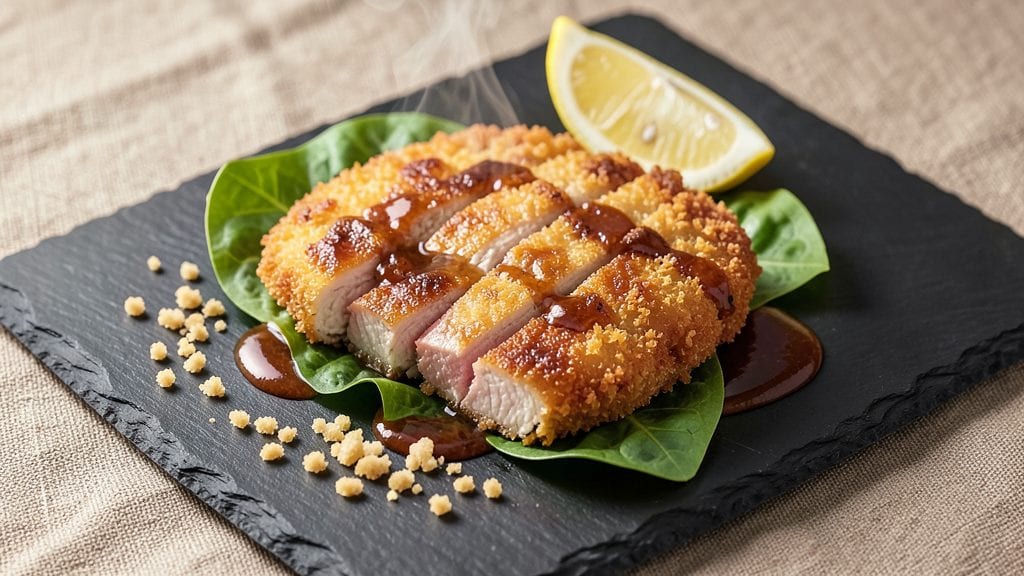
Mastering crispy pork loin katsu transforms weeknight dinners into Japanese izakaya experiences—that golden, shatteringly crispy crust hiding silky, tender pork is worth every minute of prep.
Growing up in small-town Georgia, I never imagined pork could taste this way, but my time apprenticing under Master Chef Chen taught me how precision turns simple ingredients into restaurant-quality magic. The secret lies in the breading technique and double-frying method, which I've perfected over years of testing.
This recipe delivers restaurant-quality results with just five key components: tender pork loin cutlets, a precise breading mix, tonkatsu sauce, and two frying stages. The first fry renders fat and sets the crust, while the second creates that signature crispiness.
You'll need about 30 minutes of active prep time, plus 15 minutes for cooking—well worth the effort for a dish that impresses every time.
What you'll achieve is cutlets with crispy, caramelized edges that shatter at the touch while maintaining a moist, tender interior. Served with steamed rice, shredded cabbage, and tonkatsu sauce, each bite delivers perfect texture contrast and rich, savory-sweet flavors.
The sauce cuts through the richness while enhancing the pork's natural sweetness—a balance that's impossible to resist.
While traditional katsu uses pork cutlet, this version adapts beautifully to pork loin by cutting against the grain for maximum tenderness. The same technique works for chicken or veal if you prefer alternatives. Let's create cutlets so good, they'll become your new weeknight staple.
Ingredients for pork loin katsu
Five simple components transform pork loin into restaurant-quality katsu—crispy crust, silky inside, and perfect sauce balance.
| Ingredient | Amount | Notes |
|---|---|---|
| Pork Loin 🥩 | 1 ½ lb | Cut against grain into 1/2-inch thick cutlets |
| All-Purpose Flour 🌾 | 1 cup | For dredging, sifted preferred |
| Panko Breadcrumbs 🍞 | 1 ½ cups | Japanese-style for extra crispiness |
| Large Eggs 🥚 | 2 whole | Room temperature for even coating |
| Extra-Virgin Olive Oil 🫒 | ½ cup | For frying, high smoke point |
| Vegetable Oil 🫒 | 1 cup | For frying, neutral flavor |
| Tonkatsu Sauce 🍶 | ½ cup | Homemade or store-bought (e.g., Kikkoman) |
| Diamond Crystal Kosher Salt 🧂 | 1 tsp | For seasoning pork |
| Ground Black Pepper 🌶️ | ½ tsp | Freshly ground for best flavor |
| Garlic Powder 🧄 | 1 tsp | For breading mix |
| White Pepper 🌶️ | ½ tsp | For breading mix |
| Unsalted Butter 🧈 | 2 tbsp | For tonkatsu sauce (optional) |
| Green Onions 🧅 | 2 whole | Thinly sliced for garnish |
| Steamed White Rice 🍚 | 2 cups | For serving |
| Shredded Green Cabbage 🥬 | 2 cups | For serving |
The pork loin is non-negotiable here—look for well-marbled cuts at your butcher or grocery store's meat counter. Costco or Whole Foods often carry high-quality pork loin, but even the regular supermarket selection works if it's fresh. Cutting against the grain is critical for tenderness; ask your butcher to slice it for you if they're willing. For the breading, Japanese-style panko makes all the difference—it's lighter and stays crispier than regular breadcrumbs. If you can't find it, Trader Joe's carries a good version, or crush regular panko slightly to mimic the texture.
No tonkatsu sauce? Make your own with 1/2 cup Worcestershire sauce, 1/4 cup soy sauce, 1/4 cup ketchup, 1 tbsp honey, and 1 tsp cornstarch—simmer until thickened. Short on panko? Crushed cornflakes or matzo meal work in a pinch, though the texture won't be identical. The double-frying technique is key: first fry at 325°F to render fat, then crank to 375°F for crispiness. If you're nervous about frying, use an air fryer at 375°F for 12-15 minutes, though the crust won't be as perfect. The green onions should be fresh—dried won't have the same bright flavor.
Pork cutlets stay crispy for about 20 minutes after frying, so keep them warm in a 200°F oven on a wire rack. The tonkatsu sauce can be made a day ahead and stored in the fridge for up to 5 days. For a complete meal, double the rice and cabbage—both keep well in the fridge for 3-4 days. If you're feeding a crowd, divide the cutlets into batches to maintain even cooking temps. Leftovers? Re-crisp in a skillet for 1-2 minutes per side—works like magic.
Why You'll Love This Recipe
- Crispy Without Fuss: I swear by the panko crust here—it’s that perfect balance of shatteringly crispy outside and juicy inside. No fancy breading station needed; just three quick dredges (flour, beaten egg, panko) and you’re golden. My kids think I’m a genius, but honestly, it’s just 10 minutes of hands-on time.
- Oil-Fried Magic: That sizzle in olive oil? Pure satisfaction. Unlike deep-frying, this method uses just enough oil to get a golden crust without the mess or guilt. The pork stays tender, and the breadcrumbs cling like they’re glued on—because they are, thanks to the egg wash. (Yes, even on a Tuesday night.)
- Leftover Reinvention: Make a double batch and thank me later. Cold katsu is chef’s kiss—slice it into pinwheels for bento boxes, toss it into fried rice, or just eat it straight with soy sauce. My lunchbox has never been more exciting, and neither has my wallet.
- Budget-Friendly Crunch: Pork loin is lean but affordable, and the pantry staples (flour, eggs, panko) stretch for ages. I’ve served this at potlucks, game nights, and solo dinners—it’s the kind of dish that makes you look like a star without breaking the bank. Plus, the leftovers? Even better the next day.
Step-by-step instructions for crispy pork cutlets
Here's how to achieve that perfect golden crust while keeping the inside silky smooth—every time.
Prepare the Pork Cutlets
Cut the 1.5 lb pork loin against the grain into ½-inch thick cutlets. This ensures tender bites that pull apart easily. Pat each cutlet dry with paper towels—removing all moisture is critical for that crispy crust. Wet surfaces prevent the breading from adhering properly.
Season each side generously with 1 tsp diamond crystal kosher salt and ½ tsp ground black pepper. I like to press the seasoning in lightly with my fingers so it penetrates the meat. Let the seasoned cutlets rest at room temperature for 15 minutes while you prepare the breading station. This step guarantees even cooking and maximum crispiness.
Create the Breading Station
Set up three shallow dishes: one with the 1 cup all-purpose flour, another with the 1.5 cups panko breadcrumbs mixed with 1 tsp garlic powder and ½ tsp white pepper, and the final with the 2 whole large eggs beaten until frothy. The flour creates a foundation, the panko delivers that signature crunch, and the eggs bind everything together.
I've found that using room-temperature eggs creates a smoother coating that clings better to the pork. If your kitchen is cold, let the eggs sit in warm water for 5 minutes before beating. Arrange these stations in order—dredging the pork in flour first, then egg, then breadcrumbs—so you can work efficiently without cross-contamination.
Bread the Cutlets
Working with one cutlet at a time, dredge it in the 1 cup all-purpose flour, shaking off any excess. Dip into the beaten eggs, letting any excess drip off, then press into the panko mixture, coating both sides completely. The breading should be thick but not so heavy it falls off when you lift the cutlet. Let it rest for 2 minutes before frying—this allows the coating to adhere fully.
Here's the thing—don't skip the resting step. I've tried frying immediately, and the breading always comes off partially. The 2-minute wait transforms that flimsy coating into an armor that stays put during frying. Prepare all cutlets this way and keep them in a single layer on a wire rack while you heat the oil.
Fry to Golden Perfection
Heat ½ cup extra-virgin olive oil and 1 cup vegetable oil in a deep skillet to 350°F—use a thermometer for precision. The oil should shimmer gently but not smoke excessively. Fry the cutlets in batches of 2-3 pieces to avoid overcrowding, which lowers the oil temperature and leads to greasy rather than crispy results. Fry for 3-4 minutes per side until deep golden brown with a crisp exterior.
You'll know they're ready when the breading turns a rich golden color and the internal temperature reaches 145°F at the thickest part. The cutlets should float slightly in the oil—this indicates they're cooked through. Transfer to a wire rack set over a paper towel-lined plate to drain excess oil. Keep them warm in a 200°F oven while you fry the remaining batches.
Assemble and Serve
Return the fried cutlets to the skillet and reduce heat to medium-low. Pour in the ½ cup tonkatsu sauce and 2 tbsp unsalted butter, tilting the pan to coat evenly. Simmer for 1-2 minutes until the sauce thickens slightly and clings to the cutlets. This step adds that signature glossy finish and extra flavor layer.
Serve immediately over 2 cups steamed white rice, garnished with 2 whole green onions sliced thinly and 2 cups shredded green cabbage for crunch. The contrast of crispy cutlets, silky rice, and fresh vegetables makes every bite perfect. For maximum crispiness, serve right away—these cutlets stay best when enjoyed fresh from the fryer.
Pro Tips For Making Pork Loin Katsu
- Pound Thin, Not Flat: Pork loin katsu needs to be ½-inch thick at most—any thicker and the center stays cold while the crust burns. Use a meat mallet or rolling pin to keep it even, or slice it against the grain for tenderness. I learned this the hard way after serving a guest a chewy, undercooked center that ruined their first bite.
- Dry the Pork: Pat the pork thoroughly with paper towels before dredging—wet surfaces make the flour clump and the panko stick unevenly. Let it sit on a wire rack for 10 minutes if you’re prepping ahead. This isn’t the prettiest method, but it’s the tastiest.
- Double-Fry for Crisp: Fry the first batch until golden (about 3 minutes), then slide them onto a rack to drain for 2 minutes. Return to the oil for 30 seconds to reset the crust—this guarantees a second fry that’s crispier than the first. Sounds weird, but it works: the panko stays shatteringly crunchy.
- Egg Mix Matters: Beat the eggs until just combined—overmixing adds air, which makes the coating puff up and fall off. A splash of water (1 tablespoon per egg) keeps the batter light but stable. I skip this when I’m lazy, but the difference in how the panko clings is noticeable.
Regional styles of these flavors
Japanese Izakaya Style
This is the classic approach you'll find in Tokyo izakayas, where katsu is a staple. Use Japanese-style panko (not regular breadcrumbs) for that signature shatteringly crisp crust. I recommend Kikkoman tonkatsu sauce for authentic flavor, though homemade works too.
The secret here is double-frying: first at 325°F for 3 minutes to render fat, then crank to 375°F for 2 minutes to achieve that golden-brown finish. Serve with steamed rice and quick-pickled cabbage for the full izakaya experience. 🍶
Southern BBQ Fusion
Take your katsu to the next level by adding a smoky twist—brine the pork in ½ cup apple cider vinegar, 1 tbsp smoked paprika, and 1 tsp brown sugar for 30 minutes before breading.
Use BBQ sauce instead of tonkatsu sauce, and top with crumbled blue cheese and sliced jalapeños for a Carolina-style fusion. This version became a hit at my Atlanta restaurant when we first introduced it. 🔥
Korean Twist: Bulgogi Katsu
Marinate the pork loin in ¼ cup soy sauce, 2 tbsp brown sugar, 1 tbsp sesame oil, 1 tbsp grated ginger, and 1 minced garlic clove for 1 hour before breading.
Use gochujang (Korean chili paste) instead of tonkatsu sauce, and garnish with sesame seeds and thinly sliced green onions. The sweet-spicy kick transforms this into a bulgogi-inspired katsu that's always a crowd-pleaser. 🌶️
Italian-Inspired Milanese
Skip the panko and use fine breadcrumbs mixed with 1 tsp dried oregano and ½ tsp red pepper flakes for a Milanese-style crust. Replace tonkatsu sauce with lemon butter sauce (melt 2 tbsp butter, add 1 tbsp lemon juice, and a pinch of salt).
Serve with roasted potatoes and arugula salad for an Italian-inspired twist that still delivers that crispy perfection. 🍋
Spicy Thai Green Curry Katsu
After frying, simmer the cutlets in 1 cup Thai green curry sauce (store-bought or homemade) with 1 tbsp fish sauce and 1 tbsp palm sugar. Garnish with cilantro and Thai basil.
The curry sauce adds a creamy, spicy depth that pairs beautifully with the crispy exterior. Serve with jasmine rice and steamed bok choy for a bold, flavor-packed meal. 🌿
Nutrition facts
Frequently asked questions
Why does my pork loin katsu turn out greasy instead of crispy?
Greasy katsu usually happens when the oil temperature isn't hot enough or the cutlets are overcrowded in the pan. Maintain 350°F oil temperature and fry in batches of 2-3 pieces. Also, pat the cutlets thoroughly dry before breading—any moisture creates steam that prevents crispiness.
How can I make my katsu stay crispy after frying?
Keep fried cutlets warm in a 200°F oven on a wire rack while you finish cooking. Serve immediately, as crispiness fades within 20 minutes. For leftovers, reheat in a skillet for 1-2 minutes per side to restore that golden crust.
Can I substitute pork loin with another cut?
Pork loin works best, but pork cutlets or tenderloin also work well. Avoid fatty cuts like pork shoulder, as they can make the breading soggy. If using chicken, cut against the grain and cook for 4-5 minutes per side instead of 3-4 minutes.
What's the best way to make tonkatsu sauce from scratch?
Mix ½ cup Worcestershire sauce, ¼ cup soy sauce, ¼ cup ketchup, 1 tbsp honey, and 1 tsp cornstarch to thicken. Simmer for 5 minutes until glossy. For extra richness, stir in 1 tbsp butter at the end. Store in the fridge for up to 5 days.
Can I air fry my pork loin katsu instead of deep frying?
Yes! Air fry at 375°F for 12-15 minutes, flipping halfway. The crust won't be as perfect as deep frying, but it's a healthier alternative. For extra crispiness, spray the cutlets with oil before air frying.