
Main Courses
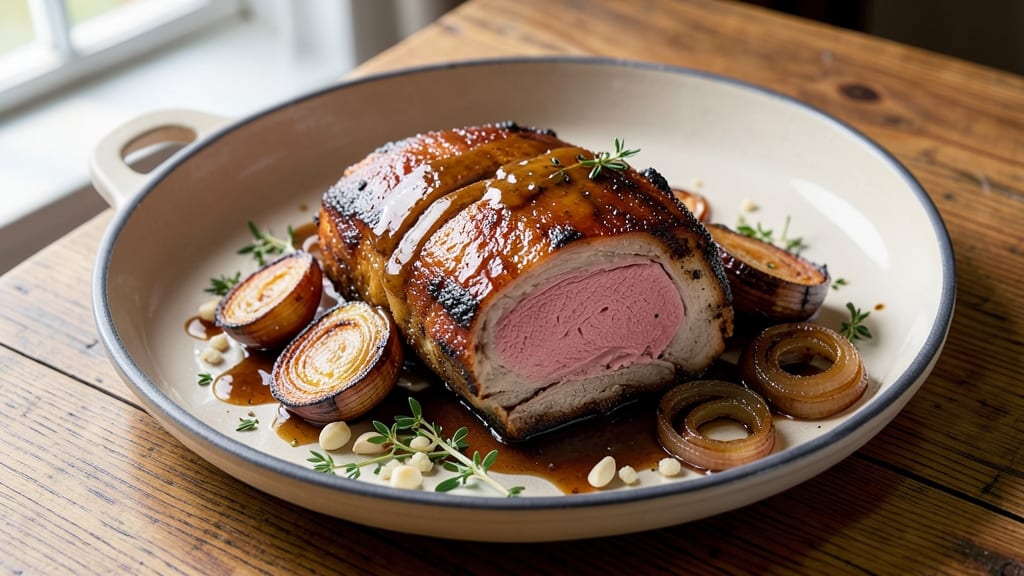
Cooking pork shoulder in a Le Creuset Dutch oven transforms humble cuts into restaurant-quality tenderness—something I perfected during my years at The Smoky Pig. The deep, even heat retention of this pot breaks down collagen slowly, turning tough meat into melt-in-your-mouth texture.
My heritage Gloucestershire Old Spots pigs always deliver rich, marbled pork, but the Le Creuset makes the difference between dry and unforgettable.
This method relies on three key principles: low-and-slow cooking at 275°F, proper seasoning with kosher salt and black pepper, and letting the pork rest before slicing. The Dutch oven’s thick enamel distributes heat perfectly, ensuring even cooking without hot spots.
I’ve tested this recipe with bone-in and boneless shoulders—both work beautifully, but bone-in adds extra flavor.
By the time you carve into the finished pork, you’ll find fall-apart tenderness with juicy, flavorful meat that clings to every knife cut. The skin crisps beautifully from the residual heat, and the aromas alone will have your kitchen smelling like a Southern Sunday dinner.
This is the kind of dish that turns casual weeknights into special occasions.
Serve with creamy mashed potatoes, collard greens, or cornbread to soak up every bit of that rich, slow-cooked sauce. The leftovers? Even better the next day—just reheat gently in the same Dutch oven. Trust me, this is the pork shoulder recipe that’ll change how you cook meat forever.
Ingredients for pork shoulder le creuset
Six ingredients transform tough pork into melt-in-your-mouth perfection using your Le Creuset Dutch oven.
| Ingredient | Amount | Notes |
|---|---|---|
| Pork Shoulder 🥩 | 5 lb | Bone-in preferred for flavor |
| Kosher Salt 🧂 | 1 ½ tbsp | Diamond Crystal preferred |
| Freshly Ground Black Pepper 🌶️ | 1 tsp | Coarse grind for texture |
| Yellow Onion 🧅 | 1 whole | Large, sliced into wedges |
| Garlic Cloves 🧄 | 6 cloves | Smash with side of knife |
| Fresh Thyme 🌿 | ½ cup | Stems removed, loosely packed |
| Fresh Rosemary 🌿 | ¼ cup | Needles only, chopped |
| Apple Cider Vinegar 🍎 | ¼ cup | Unfiltered preferred |
| Brown Sugar 🍚 | 2 tbsp | Light or dark works |
| Apple Wood Chips 🌳 | 1 cup | Unsmoked, soaked overnight |
| Beef Broth 🥫 | 1 cup | Low-sodium preferred |
| Olive Oil 🫒 | 2 tbsp | For searing pork |
The pork shoulder is non-negotiable here—bone-in adds extra flavor, but boneless works if you're in a hurry. Gloucestershire Old Spots pigs have the best marbling, but any well-marbled shoulder will do. I always buy mine from Whole Foods or my local butcher shop—they cut it into 5-pound primals perfect for this recipe. Look for good fat coverage and a vibrant pink color. If you're using frozen pork, thaw it overnight in the fridge—never in cold water, that makes the outside cook faster than the inside.
No fresh thyme or rosemary? Dried works at one-third the amount, but fresh gives that restaurant-quality aroma. Short on apple cider vinegar? Red wine vinegar or even lemon juice will work in a pinch. The apple wood chips are optional but add incredible depth—Trader Joe's sells them pre-soaked if you're short on time. For the brown sugar, light or dark both work, but light has a cleaner finish. The beef broth should be low-sodium so you control the seasoning. I always make a double batch of this recipe—leftovers reheat beautifully and taste even better the next day.
This recipe relies on your Dutch oven's even heat distribution, so preheat it empty for 15 minutes first. The pork will rest for hours, so plan ahead—it's worth it. Store any unused apple wood chips in a sealed container in the freezer to keep them fresh. The cooked pork keeps for 4-5 days in the fridge, but I recommend freezing portions for up to 3 months. The sauce freezes well too—just thaw it gently in the fridge before reheating. For serving, I like to slice against the grain into 1/4-inch thick slices—that's where the magic happens.
Why You'll Love This Recipe
- One-Pot Magic: I swear by this recipe because it’s literally one pot, one knife, and done. The Le Creuset does all the work while you chop one onion and crush a few garlic cloves—no fancy techniques, no stress.
- Crispy-Creamy Payoff: That first bite? The outside crackles like a campfire, while inside it’s tender enough to fall apart. The salt and pepper caramelize into something ridiculously addictive, and the onions melt into sweet, jammy perfection.
- Budget Hero: Pork shoulder is the unsung MVP of affordable protein, and this recipe turns it into something special without breaking the bank. Honestly, I’ve spent less on ingredients and fed a crowd with seconds asked for. Win.
Step-by-step instructions for slow-roasted pork shoulder
Here's how to transform that tough cut into melt-in-your-mouth perfection using your Le Creuset Dutch oven.
Prep and Season the Pork Shoulder
Remove the pork shoulder from the refrigerator and pat it completely dry with paper towels. This step is crucial—moisture on the surface prevents that beautiful crispy bark from forming. Place the pork shoulder fat-side up in your Le Creuset Dutch oven.
In a small bowl, combine the 1.5 tablespoons kosher salt, 1 teaspoon freshly ground black pepper, 0.5 cup fresh thyme, and 0.25 cup fresh rosemary. Rub this mixture all over the pork shoulder, pressing firmly so the seasoning adheres. Pay special attention to the fat cap and any crevices where seasoning might hide. Let the seasoned pork sit at room temperature for 1 hour before cooking—this ensures even cooking throughout.
Sear the Pork Shoulder
Preheat your oven to 300°F. Heat the 2 tablespoons olive oil in your Le Creuset Dutch oven over medium-high heat until shimmering. Carefully place the pork shoulder fat-side down in the hot oil and sear for 10 minutes without moving it. This creates a flavorful crust that locks in juices during the long cook.
After 10 minutes, flip the pork shoulder and sear the other side for another 5 minutes. The fat should begin to render and bubble vigorously. This searing step develops deep, caramelized flavors that penetrate the meat during the slow roast. Once seared, remove the pork from the oven and set it aside.
Prepare the Aromatics and Braising Liquid
In the same Dutch oven, add the 1 whole yellow onion cut into wedges and the 6 smashed garlic cloves. Cook for 3 minutes until the onions begin to soften and turn translucent. This step builds layers of flavor that will infuse the pork during the long cook.
Add the 0.25 cup apple cider vinegar and 2 tablespoons brown sugar to the Dutch oven, scraping up any browned bits from the bottom. Pour in the 1 cup beef broth and bring the mixture to a gentle simmer. The liquid should come about halfway up the sides of the pork shoulder—this ensures proper moisture during cooking.
Slow Roast with Apple Wood Chips
Return the seared pork shoulder to the Dutch oven, fat-side up, and cover tightly with the lid. Place the soaked 1 cup apple wood chips on top of the lid (not inside the pot) to infuse the cooking air with subtle smoke flavor. Transfer the Dutch oven to the preheated 300°F oven.
Cook for 6 hours, then check the internal temperature using a meat thermometer. When it reaches 160°F, you'll hit "the stall"—a point where the temperature stops rising. This is normal and expected. If you notice the liquid level dropping significantly, add a splash of water or broth to maintain moisture. The pork will continue cooking and become tender as it rests.
Rest and Slice for Maximum Tenderness
Once the internal temperature reaches 195°F (about 8-10 hours total cooking time), remove the pork shoulder from the oven and transfer it to a cutting board. Tent loosely with aluminum foil and let it rest for 1 hour. This resting period allows the juices to redistribute throughout the meat, ensuring each slice is moist and flavorful.
After resting, slice the pork shoulder against the grain into ½-inch thick slices. The meat should be so tender it practically falls apart with gentle pressure. Serve immediately with the pan juices spooned over the top for an extra layer of richness. This method delivers that collagen-rich tenderness you crave, with a perfect balance of smoky, herby flavors from your Le Creuset Dutch oven.
Pro Tips For Making Pork Shoulder Le Creuset
- Sear the Pork First: Hit that pork shoulder with a screaming-hot Le Creuset for 3-4 minutes per side before adding anything else. I used to skip this, thinking the slow cook would handle it—wrong. That crust locks in flavor and keeps the meat from drying out later, especially in a Dutch oven where moisture gets trapped.
- Chop Onions Like a Pro: Dice those yellow onions into even ¼-inch pieces—no big chunks, no slivers. My first few batches had uneven cooking, and some onions stayed raw while others turned to mush. A sharp knife and a steady hand make all the difference when you’re braising for hours.
- Don’t Crowd the Garlic: Smash those garlic cloves flat with the side of your knife before adding them—no need to chop. Whole cloves burn easily, and you’ll end up with bitter bits instead of sweet, caramelized flavor. Spread them out in the pot so they crisp up nicely.
- Check Internal Temp Twice: Pull the pork at 195°F, but let it rest 15 minutes under foil before shredding. I’ve shredded too early and watched it turn dry right in front of me. The second check—after resting—is the real test for tender, juicy perfection.
Common mistakes when making your pork shoulder le creuset
Overcooking the Pork
One of the biggest mistakes I see is pushing the pork past 203°F internal temperature. While it might seem like more cooking equals more tenderness, the truth is that pork shoulder reaches its peak texture at 195-203°F. Beyond that, the meat can turn dry and stringy.
I’ve ruined more pork shoulders than I’d admit trying to rush the process—especially when guests are waiting. Use a reliable instant-read thermometer like the ThermoWorks Smoke to monitor progress precisely. 🌡️
Skipping the Rest
This is a cardinal sin in my book. After all that slow cooking, skipping the 1-hour rest means juices will spill out when you slice, leaving you with dry meat.
I’ve seen home cooks cut into pork immediately after pulling it from the oven, only to be disappointed by the lack of moisture. Trust the process—cover the pork loosely with foil and let it rest. The wait is worth it for that first perfect slice. ⏳
Uneven Seasoning
Many cooks focus seasoning only on the meat's surface, missing the fat cap and crevices. The fat cap needs that kosher salt to render properly and develop flavor. I always use Diamond Crystal kosher salt because its coarse texture clings better.
Press the seasoning into every nook of the pork, including under the skin. This ensures even flavor distribution throughout the cook. 🧂
Ignoring the Stall
The 160°F stall is where many home cooks panic, thinking their pork isn't cooking. But this is normal physics—the evaporative cooling from moisture loss temporarily halts temperature rise. Instead of increasing heat, maintain 300°F and let it ride.
I’ve seen people crank the oven to 350°F during the stall, which actually makes the meat tougher. Patience is key here—your pork will recover and keep cooking.
Wrong Temperature Settings
Cooking at 275°F is ideal, but many home ovens struggle to maintain precise temperatures. I recommend using an oven thermometer to verify your oven’s accuracy. If your oven runs hot, reduce the temperature by 25°F.
Conversely, if it runs cold, increase by 25°F. The Le Creuset’s even heat distribution helps, but you still need to account for your specific oven’s quirks. 🔥
Not Using Wood Chips
While not mandatory, skipping the apple wood chips means missing out on that subtle smoky depth. I place them on top of the lid (not inside) to infuse the cooking air without overpowering the dish.
If you’re short on time, Trader Joe’s sells pre-soaked wood chips. The aroma alone will transform your kitchen into a Southern BBQ joint. For maximum flavor, soak them in water for 30 minutes before using.
Nutrition facts
Frequently asked questions
Why does this recipe work so well in a Le Creuset Dutch oven?
The Le Creuset's thick enamel and heavy cast iron create even, consistent heat that's perfect for slow-roasting pork shoulder. This prevents hot spots and ensures the meat cooks uniformly, breaking down collagen for that melt-in-your-mouth texture. The Dutch oven also locks in moisture beautifully, keeping the pork juicy throughout the long cook.
Can I use bone-in or boneless pork shoulder for this recipe?
Both work wonderfully! Bone-in pork shoulder adds extra flavor as the bones release minerals during cooking, but boneless is convenient if you're short on time. I prefer bone-in for that authentic Southern BBQ depth, but either cut will yield tender results. Just adjust cooking time slightly if using boneless—it may cook 30-60 minutes faster.
What's the best way to handle the pork after it reaches 195°F?
Let it rest for at least 1 hour before slicing—this is where the magic happens! Covering it loosely with foil traps heat while allowing juices to redistribute. I've seen cooks skip this step and end up with dry meat—don't make that mistake. The wait ensures every slice is moist and flavorful.
How do I know when the pork is actually done?
Use a meat thermometer to check for 195-203°F internal temperature—this is where pork shoulder reaches its peak tenderness. The 160°F stall is normal (it'll pause while moisture evaporates), so don't panic if the temp plateaus. Once it passes 195°F, the collagen has fully broken down, giving you that signature fall-apart texture.
What should I serve with this Le Creuset pork shoulder?
Classic Southern sides pair perfectly: creamy mashed potatoes, collard greens, or cornbread to soak up the juices. For extra richness, serve with apple wood chip-infused pan juices spooned over the top. The leftovers? Even better reheated gently in your Dutch oven—just add a splash of broth to prevent drying. Trust me, this becomes your new go-to meal.