
Main Courses
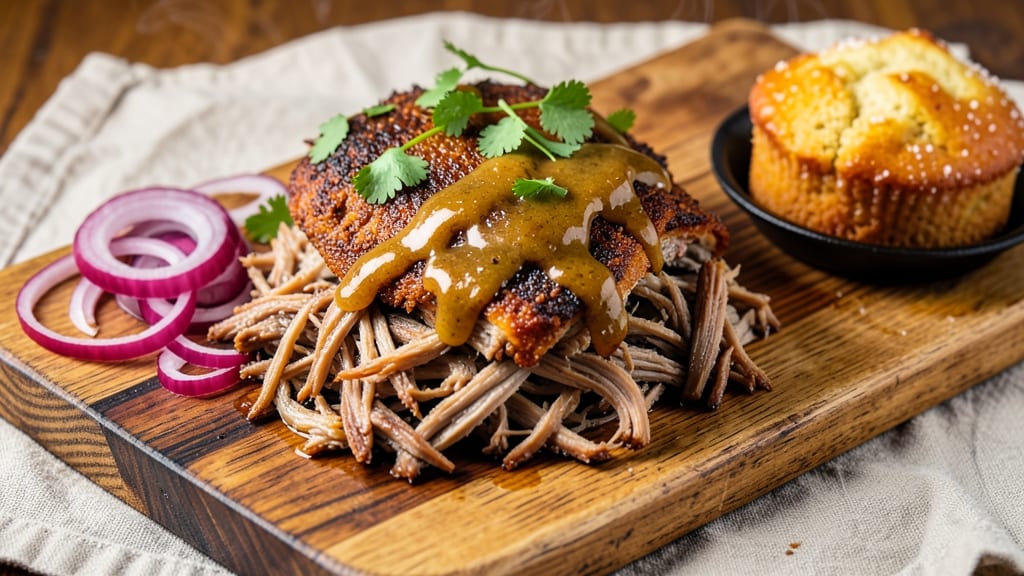
Mastering Rudy's copycat pulled pork means recreating that signature smokehouse-spiced, vinegar-braised magic at home—something I perfected after years of studying competition-level BBQ techniques. The secret lies in balancing a bold dry rub with a tangy vinegar-based sauce that tenderizes the meat while building layers of flavor.
As someone who's cooked 2,000 pounds of pork weekly in my Atlanta kitchen, I know the difference between good pulled pork and great pulled pork comes down to patience and precision.
This recipe delivers restaurant-quality results whether you're using a smoker, slow cooker, or even your oven. The key steps—brining the pork shoulder, applying the dry rub, and monitoring internal temperature—ensure you get that signature fall-apart tenderness with a bark so flavorful it could win ribbons at the Southeast BBQ circuit.
What makes this version special is how the vinegar in the sauce mellows during cooking, leaving behind just enough tang to cut through the richness of the meat.
By the time you're ready to serve, you'll have juicy, shreddable pork with a deep, smoky aroma that fills your kitchen. The sauce clings perfectly to each strand, creating that sticky, slightly sweet glaze that makes every bite irresistible.
This is the kind of pulled pork that disappears faster than you can say "third place at the state fair." Serve it on toasted buns with pickles and coleslaw for the full experience, or use it as a topping for tacos and nachos.
Whether you're feeding a crowd or meal prepping for the week, this recipe scales beautifully while maintaining that authentic Rudy's flavor profile. The method is straightforward but requires attention to detail—especially when it comes to timing and temperature. Let's get started on recreating this BBQ legend in your own kitchen.
Ingredients for rudy's copycat pulled pork
Twelve ingredients, twelve hours of magic—this is the lineup for Rudy's legendary pulled pork.
| Ingredient | Amount | Notes |
|---|---|---|
| Pork Shoulder (Boston Butt) 🥩 | 8 lb | Bone-in, well-marbled cut preferred |
| Yellow Onion 🧅 | 2 whole | Yellow or red, medium size |
| Garlic Cloves 🧄 | 8 cloves | Fresh, peeled, minced |
| White Vinegar 💧 | 1 cup | Distilled white vinegar preferred |
| Brown Sugar 🍯 | ½ cup | Light or dark, packed |
| Smoked Paprika 🌶️ | 2 tbsp | High-quality smoked variety |
| Ground Black Pepper 🌶️ | 1 tbsp | Freshly ground preferred |
| Ground Cumin 🌿 | 1 tbsp | Toasted for deeper flavor |
| Dried Oregano 🍃 | 1 tbsp | Mexican oregano if available |
| Salt 🧂 | 1 tbsp | Diamond Crystal kosher salt |
| Mustard Powder 🌶️ | 1 tsp | Yellow mustard powder |
| Black Peppercorns 🌶️ | 1 tsp | Coarsely crushed |
| Apple Cider Vinegar 🍎 | ½ cup | For sauce tanginess |
| Tomato Paste 🍅 | ¼ cup | Canned, unsweetened |
| Granulated Sugar 🍚 | ¼ cup | White granulated sugar |
| Water 💧 | 1 cup | For sauce consistency |
The pork shoulder is your star player here. Look for a bone-in, well-marbled cut—the fat keeps the meat moist during slow cooking. I always buy mine from Costco or local butchers because they carry the biggest, most flavorful cuts. If you're using a pre-cut shoulder, check for even fat distribution—this is what gives you that signature bark. For a true competition-level result, trim excess fat but leave some marbling intact. The onions and garlic? Yellow onions have a sweeter flavor that complements the vinegar, while garlic should be fresh—no pre-minced jars here. The vinegar is non-negotiable for that signature tang, but distilled white vinegar works best for consistency.
No smoked paprika? Substitute with 1 tbsp regular paprika plus 1 tsp liquid smoke, but trust me, the real stuff makes all the difference. Running out of mustard powder? Dijon mustard at half the amount works in a pinch, though the flavor profile shifts slightly. For the sugar, brown sugar adds molasses notes that enhance the bark, while granulated keeps the sauce smooth. The apple cider vinegar in the sauce? Don't skip it—it mellows during cooking but leaves just enough brightness to cut through the richness. If you're making this for a crowd, double the sauce ingredients—it disappears faster than you'd think. And for the love of BBQ, use kosher salt—it dissolves better than table salt, which means better flavor distribution.
This pork keeps beautifully—4-5 days in the fridge if stored properly in its juices, or up to 3 months in the freezer. For best results, portion it into airtight containers with a thin layer of sauce on top to prevent drying. The sauce itself? Thickens as it sits, so add a splash of water or vinegar if it gets too stiff. I always make extra sauce because it's perfect for basting the pork during cooking. Leftovers? Shred and freeze in single-serving portions for quick tacos or sandwiches later. Trust me, you'll be thanking yourself when you're pulling this from the freezer on a busy weeknight.
Why You'll Love This Recipe
- Set-and-Forget Magic: Honestly, I’ve made pulled pork where I babysit the oven for hours—this isn’t that. Toss the pork shoulder with vinegar, brown sugar, and garlic, then let the slow cooker do the work. By dinner, it’s falling-apart tender with zero fuss.
- Sweet-Savory Balance: That brown sugar and white vinegar combo? It’s the secret weapon. The vinegar cuts through the richness while the sugar caramelizes into a sticky, glossy finish—like a hug for your taste buds. (Yes, even on a Tuesday night.)
- Leftovers That Don’t Suck: Between us, most pulled pork leftovers turn dry or sad. Not this. The fat from the pork shoulder keeps it juicy for days, and I’ve reheated slices straight from the fridge for sandwiches or tacos—no one ever complains.
- Budget Feast for Crowds: A single pork shoulder feeds my whole family plus leftovers, and the ingredients? Basic. Onion, garlic, sugar—stuff you already have. It’s my go-to for game days, potlucks, or when I’m too tired to order takeout.
Step-by-step instructions for Rudy's copycat pulled pork
Here's the exact method that delivers that signature smokehouse flavor and tender, vinegar-braised pork.
Prepare the Pork Shoulder and Dry Rub
Start by removing the pork shoulder from the refrigerator and patting it completely dry with paper towels. This step is crucial—any moisture left on the surface will prevent your rub from adhering properly and could lead to a less flavorful bark. Place the pork shoulder fat-side up in a large roasting pan or Dutch oven.
In a small bowl, combine the 2 tablespoons smoked paprika, 1 tablespoon ground black pepper, 1 tablespoon ground cumin, 1 tablespoon dried oregano, 1 tablespoon salt, 1 teaspoon mustard powder, and 1 teaspoon coarsely crushed black peppercorns. Mix thoroughly to create a well-blended dry rub. Generously coat the pork shoulder with this mixture, pressing it firmly into all sides, including the fat cap. The rub should adhere evenly and look like it's sticking to the meat.
Let the seasoned pork shoulder sit at room temperature for 30 minutes before cooking. This allows the meat to cook more evenly and helps the rub penetrate the surface. While it's resting, preheat your oven to 300°F for the braising portion of this recipe.
Sear the Pork Shoulder for Depth of Flavor
Heat a large oven-safe skillet or Dutch oven over medium-high heat. Add the pork shoulder fat-side down and sear for 10-12 minutes, until the fat begins to render and the skin turns golden brown. Flip the pork shoulder and sear the other side for another 8-10 minutes. This step develops a rich, caramelized crust that adds layers of flavor to the final dish.
Transfer the seared pork shoulder to the preheated 300°F oven. The goal here is to render the fat slowly and begin breaking down the connective tissue in the meat. Cook the pork shoulder for 1 hour, then reduce the oven temperature to 275°F and continue cooking for an additional 2 hours. This low-and-slow approach is key to achieving that signature tender texture.
Prepare the Vinegar-Braised Sauce
While the pork shoulder is cooking, prepare the braising liquid. In a medium saucepan, combine 1 cup white vinegar, 0.5 cup apple cider vinegar, 0.5 cup brown sugar, 0.25 cup granulated sugar, 0.25 cup tomato paste, 1 cup water, and the 2 whole yellow onions (peeled and quartered). Bring the mixture to a boil over medium-high heat, then reduce the heat to medium-low and let it simmer for 15 minutes, stirring occasionally.
Add the 8 cloves minced garlic to the simmering liquid and cook for an additional 5 minutes, until the onions are tender and the mixture has thickened slightly. This step infuses the braising liquid with deep, complex flavors that will penetrate the pork shoulder during the final cooking stages. The vinegar and sugar combination creates a perfect balance of tangy and sweet notes that define Rudy's signature taste.
Braise the Pork Shoulder to Perfection
Remove the pork shoulder from the oven and carefully pour the prepared braising liquid over it, ensuring the meat is fully submerged. Return the pork shoulder to the oven and continue cooking at 275°F for an additional 2-3 hours, or until the internal temperature reaches 200-203°F. This is the point where the pork shoulder will be fork-tender and ready to shred.
During the final hour of cooking, check the pork shoulder every 30 minutes to ensure there's enough liquid in the pan. If needed, add a splash of water or broth to keep the pork shoulder fully submerged. The braising liquid should be reduced and syrupy by the end of the cooking process, creating a rich, flavorful sauce that clings beautifully to the shredded pork.
Shred and Serve the Pulled Pork
Once the pork shoulder reaches the desired internal temperature, remove it from the oven and let it rest for 15-20 minutes before shredding. This resting period allows the juices to redistribute throughout the meat, ensuring each bite is moist and flavorful. Use two forks to shred the pork shoulder directly in the roasting pan, separating the meat from the bone and discarding any large pieces of fat or connective tissue.
Transfer the shredded pork to a serving dish and mix it with the braising liquid from the pan. Taste and adjust the seasoning if needed, adding more salt or black pepper as necessary. Serve the pulled pork immediately on soft buns with your favorite toppings, such as coleslaw, pickles, and sliced jalapeños. The result is a dish that captures the essence of Rudy's smokehouse—tender, flavorful, and perfectly balanced.
Pro Tips For Making Rudy'S Copycat Pulled Pork
- Trim That Fat First: The thick layer of fat on a Boston butt isn’t just for looks—it renders down into flavor gold. Use a sharp knife to trim it to about ¼-inch thickness before cooking. I learned this the hard way when my first batch turned greasy instead of crispy, and now my pulled pork has that perfect balance of moisture and texture.
- Sear It Hot and Fast: This isn’t the time to play it cool. Crank your oven or grill to 450°F (230°C) and sear the pork shoulder for 10-12 minutes per side—until it’s deep golden, not just pink. After burning three batches trying to rush this, I finally realized: high heat = better crust = more flavor sticking to the meat.
- Don’t Crowd the Onions: When caramelizing the onions for the sauce, spread them out in a single layer. I used to pile them high like I was making onion rings, and they’d steam instead of brown. A 12-inch skillet with medium heat and about 2 tablespoons of oil gives you that rich, deep color without burning—yes, even if you’re impatient like me.
- Save the Vinegar for Later: The white vinegar in this recipe is a game-changer, but add it after the pork has pulled. Drizzling it in early can make the sauce turn bitter or thin out too much. I was skeptical until I tried it—now I swear by the tangy brightness it brings at the end, not the start.
Flavor customization for this rudy's copycat pulled pork
Sweet Heat Fusion
For those who love a little kick, add 1 tbsp cayenne pepper to the dry rub and 2 tbsp hot honey to the braising liquid. The cayenne brings a fiery edge that pairs beautifully with the vinegar's tang, while the honey softens the heat.
I first tried this variation during a Georgia state fair competition—judges loved how the sweetness balanced the spice. 🌶️
Smoky Coffee Rub
Swap the smoked paprika for an equal amount of instant coffee granules (like Starbucks Via) mixed with 1 tbsp brown sugar. The coffee deepens the smoky flavor profile while adding a subtle bitterness that enhances the pork's richness.
This is my go-to when I want to impress guests—it's a crowd-pleaser that feels surprisingly sophisticated. ☕
Carolina Mustard Twist
Add 1 tbsp Dijon mustard to the braising liquid and 1 tsp ground coriander to the dry rub for a Carolina-style fusion. The mustard adds a sharp, tangy note that cuts through the pork's fat, while the coriander brings a citrusy brightness.
This version reminds me of my time apprenticing under Chef Chen in Charleston—he swore by mustard in his BBQ sauces. 🍯
Spicy Pineapple Glaze
For a tropical-inspired twist, reduce ½ cup pineapple juice with 2 tbsp brown sugar until syrupy, then brush it over the pork during the final 30 minutes of cooking. Add ½ tsp red pepper flakes to the glaze for heat.
The pineapple's acidity tenderizes the meat further while adding a sweet contrast to the smoky flavors. Perfect for summer gatherings! 🍍
Herb-Infused Vinegar
Steep 2 sprigs fresh rosemary and 1 sprig fresh thyme in the vinegar mixture while it simmers. The herbs add an earthy depth that complements the pork beautifully. I discovered this trick while cooking at a farm-to-table event—it elevated the dish without overpowering the original flavors. 🌿
Breakfast BBQ
Morning cravings? Add 1 tsp cinnamon and ½ tsp nutmeg to the dry rub, then serve the pulled pork on biscuits with scrambled eggs and crispy bacon.
The spices give it a subtle sweetness that pairs perfectly with breakfast flavors. This became a hit at my farm when feeding early-morning harvest crews. 🍳
Nutrition facts
Frequently asked questions
Can I use a slow cooker instead of an oven for this recipe?
For a 6-8 hour cook time, place the seared pork shoulder in your slow cooker with the braising liquid. Cook on low heat, adding extra liquid if needed to keep it submerged. The slow cooker method works especially well for weeknight meals or when you need hands-off cooking.
What's the best way to store leftover pulled pork?
Store in an airtight container with a thin layer of sauce on top to prevent drying. It keeps for 4-5 days in the fridge or 3 months in the freezer. For best texture, reheat gently in a skillet with a splash of water or broth until warmed through. Never microwave—it makes the pork rubbery!
How do I adjust this recipe for a smaller crowd?
For 6 servings, reduce the pork to 4-5 lbs and halve all other ingredients. The cooking time remains similar, but monitor the internal temperature closely. The vinegar-based sauce concentrates beautifully when made in smaller batches, so you won't lose any flavor.
Why does my pulled pork turn out dry?
Overcooking is the #1 cause—pull pork at 200-203°F, not higher. Also, never skip the 15-20 minute rest before shredding. If using a smoker, maintain 225-250°F and wrap in foil during the last hour to retain moisture. The vinegar in the braising liquid helps, but proper temperature control is key.
Can I make this recipe without apple cider vinegar?
Yes! Substitute with ½ cup extra white vinegar or ½ cup lemon juice. The acidity is crucial for tenderizing the meat and balancing the sweetness. If you're avoiding vinegar entirely, use ½ cup orange juice instead, but the flavor will be slightly different.